Sunday, June 8, 2025

Turtle Dove & Wood Warbler added to my Hampshire year list.

Saturday 7th June 2025.


It looks as though we had a good winter for Song Thrushes as we found many in the New Forest today.


The Moth Box:


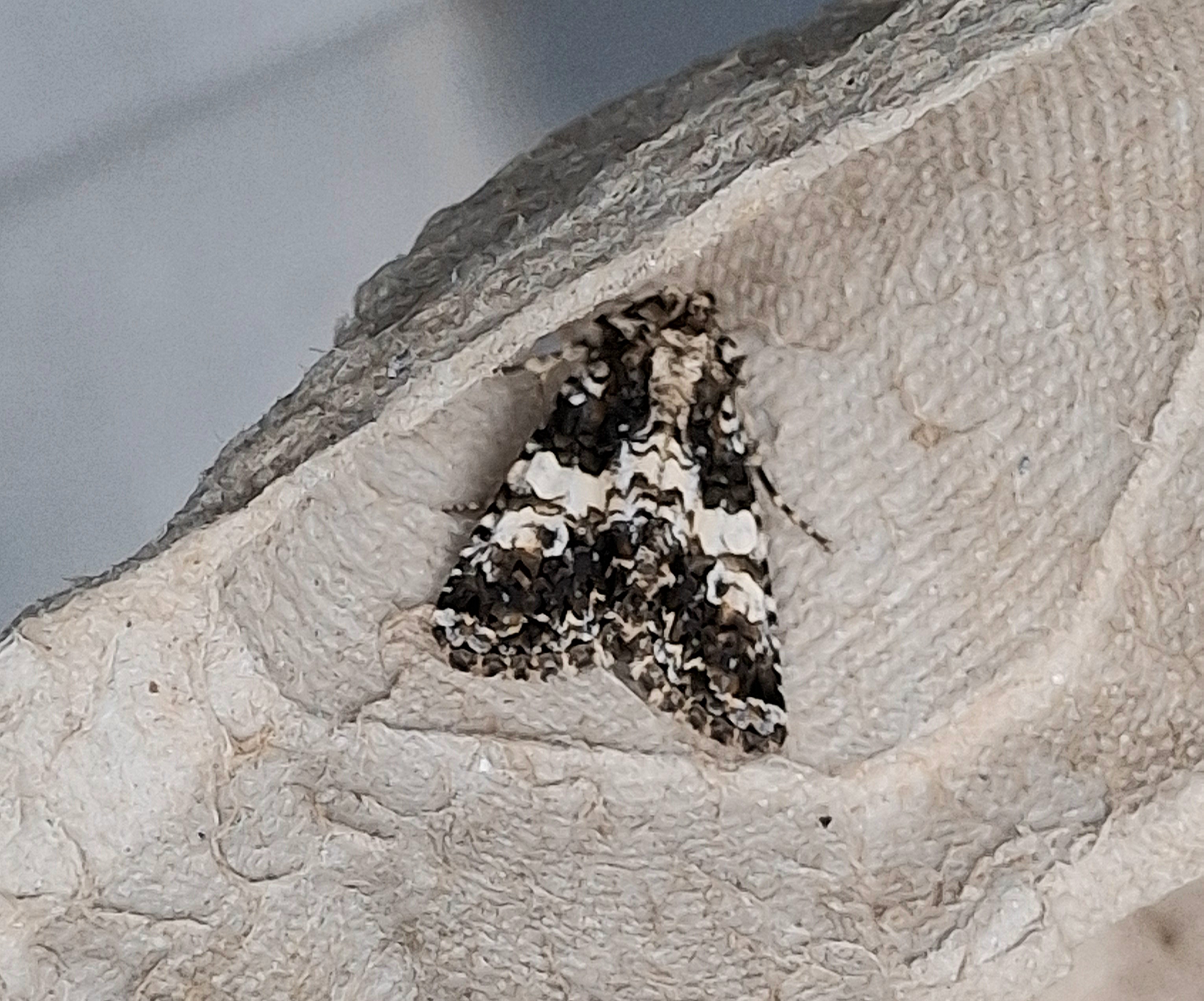
This tiny Apple Leaf Skeletonizer (Choreutis pariana) was my first ever.

It was very wet overnight though, thankfully, the rain had stopped by the time I got into the garden to check the Moth Box. Bright sunshine with a bit of cloud overhead got me buzzing to check the moths and as expected, there was a low turnout. Despite only being just 23 moths of 13 species, there was a ‘Lifer’ among them. It was a micro moth, but my first ever Apple Leaf Skeletonizer (Choreutis pariana) that was carefully balanced on one of the egg trays inside the Moth Box. How on earth did this little moth get a name like that probably needs therapy? Sounds like something out of a cartoon! However, Geoff came up with probably why. The moths caterpillars eat the leaves and leave the stem behind which look like the skeleton of the leaf! Makes sense!


My second Setaceous Hebrew Character of the year after finding one in Devon recently.

I think I flushed a Willow Beauty for it did not settle and flew out of the Box only to be chased by a House Sparrow and was nearly caught twice, but thankfully flew off high and away. My second Setaceous Hebrew Character of the year was present within the Moth Box; my first being in Devon a few weeks back.

The Moths present included the following:

Macro moths:

  • White Ermine x4
  • Straw Dot x1
  • Buff Ermine x1
  • Heart & Dart x3
  • Dark Arches x3
  • Bright-line Brown-eye x1
  • Shuttle-shaped Dart x2
  • Setaceous Hebrew Character x1

Micro moths:

  • Light Brown Apple Moth x2
  • Rusty-dot Pearl x1
  • Apple Leaf Miner x1
  • APPLE LEAF SKELETONIZER x1


My first Turtle Doves of the year:


Swallows were hawking insects over the fields.

Not getting back into ‘Turtlegate’ again, I have not put on my blog where we went to find the Turtle Doves this morning, but the good news is that we DID see at least two at the site we drove too this morning, with possibly three birds present of which put a big smile on our faces. The weather was going to be very ‘iffy’ today and though it rained heavily overnight, it had eased up around 6am and we had a window of around 7 hours afterwards before the heaven opened yet again. I had made up my mind to go for the Turtle Doves first thing this morning and then hammer down the M27 (with all the horrible roadworks) and into the New Forest to see the Wood Warblers afterwards.


Above, Bladder Campion and below, Greater Knapweed, both growing by the side of the country road.


So, from the first site, we waited patiently overlooking some beautiful countryside and being entertained by the local birdlife and plants from our viewpoint. Geoff was pointing out the plants growing along the roadside that included Bladder Campion, Pyramidal Orchids, Greater Knapweed, Cow Parsley and Hedge Rose to name some of the flowering plants. 


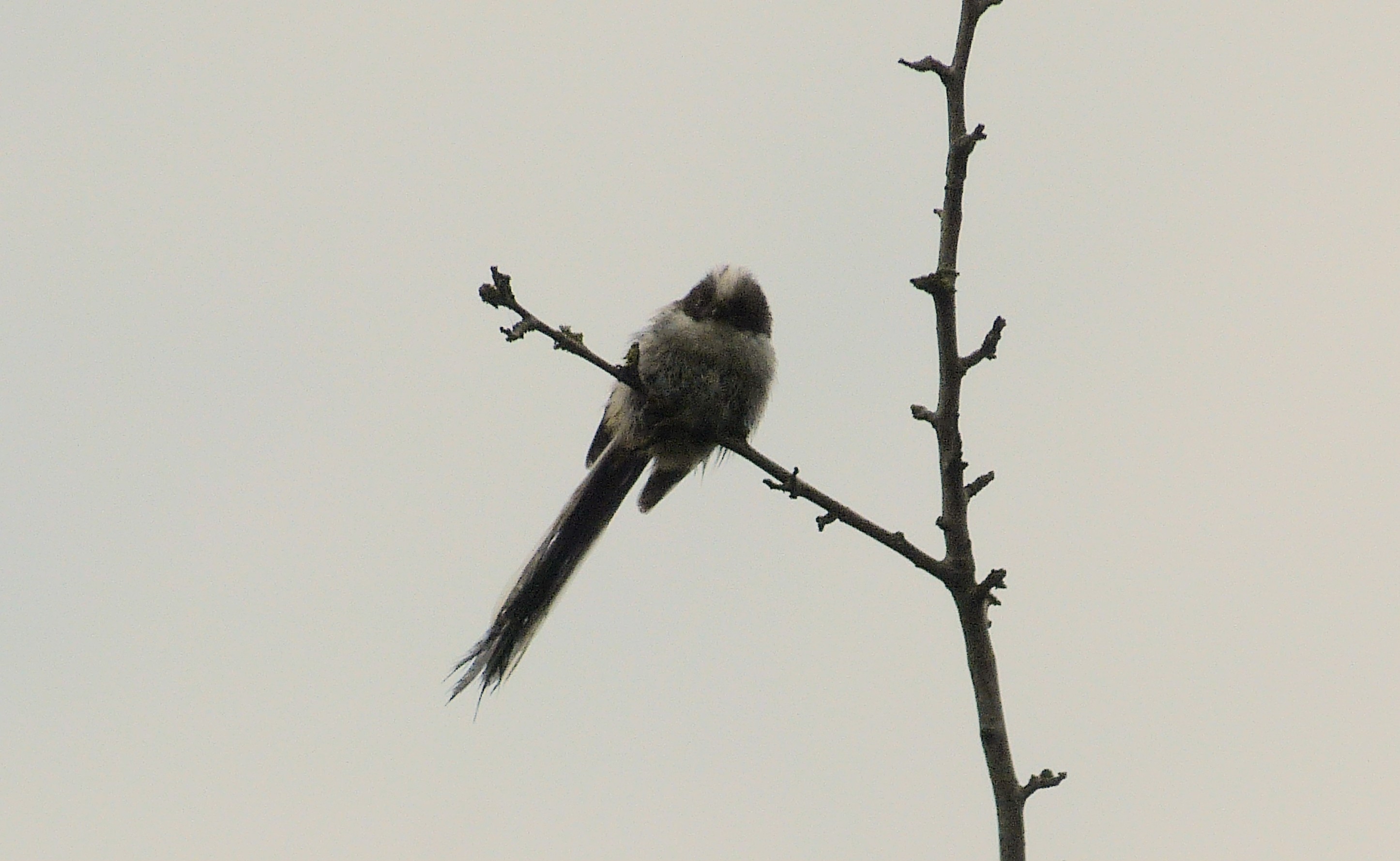
Above, this Common Whitethroat was singing on an overhead wire when we got out of the car and below, a flock of Long-tailed Tits were by the roadside.


Above and below, a male Blackcap was foraging for insects and successfully picked out a big caterpillar and quickly disappeared.


Above, we enjoyed scanning the nearby fields for birds and watching the Swallows hawking for insects. A few Rabbits were in the fields too. Below, a Great Spotted Woopecker shared some space with a Song Thrush.


The birdlife present included numerous Swallows hunting insects over the fields, a Common Whitethroat singing from an overhead wire that greeted us when we got out of the car, a Chiffchaff in full song close to the main road and a male Blackcap foraging for insects in a nearby tree. A Linnet flew over our heads as did a Grey Heron heading northbound, while over a nearby hill, a pair of Ravens soared over and Great Spotted Woodpecker was seen foraging on the ground in a nearby field along with a few Song Thrushes. What a lovely place to be first thing in the morning. But where was the star bird? 


Above, this singing Chiffchaff was just yards from where we stood as we waited patiently for the star birds to show. 


Above and below, this Grey Heron lazily flapped northbound over the gorgeous Hampshire countryside.


Enough said!

I was checking much further north using my binoculars and then something caught my eye. I quickly got the telescope onto the said bird and there it was, my first Turtle Dove of the year. The bird was perched on a post at first and behind it was a second bird. I quickly got the guys on the birds as we enjoyed a very relaxed ten minutes or so just enjoying one of the UK’s rarest birds through my telescope. Sadly, the birds were just too distant to get a photo. The future for this species is still uncertain despite a ban on shooting of the species on the Continent, but there is hope as more and more areas are making huge efforts in getting the right areas for the birds to breed in. So, the first bird species to see was now in the bag and next, it was into the New Forest for our second.


The singing Chiffchaff at this site this morning.


My first Hampshire Wood Warbler for the year:


While I was in Devon having a thoroughly relaxing time with Becky and the dogs, last Saturday, Geoff and Andy went into a place in the New Forest where they eventually came across two Wood Warblers. So we all went back to that site and after nearly an hour of a singing Wood Warbler singing deep within the wood, we eventually saw the bird briefly singing within the canopy of a Beech tree. A second bird was heard singing some distance away, but the closer bird was mostly hidden from view. 


Above and below, this Spotted Flycatcher put on a good show in front of us within the Inclosure.


Above, a Common Buzzard soaring high over the Inclosure and below, this adult Song Thrush was being followed by one of its youngsters. 


I had never been to this location in the New Forest before, but it was a beautiful Inclosure where we had sightings of a Spotted Flycatcher, Marsh Tit, several Siskins, Common Buzzard, a female Blackcap, at least two singing Willow Warblers while other birds heard included a Cuckoo, Goldcrest, Firecrest and Crossbills. We heard a raptor calling somewhere within the woods and both Geoff and I agreed that it was a Goshawk!


Above, what is more beautiful than looking at a spread of Foxgloves in a woodland glade? Below, the footpaths were bordered by the tall Marsh Thistles.


Above, when the sun did show, the insects then came. This Common Blue Damselfly was found by Geoff and below, the Field Cuckoo-bee's were nectaring on the Marsh Thistles.


Above, the tiny Marmalade Hoverfly nectaring on a Meadow Buttercup. Below, a spray of Cat's Ears by the footpath.


Meadow Buttercups were abundant along the footpath.

As I said to the guys, what better place to be in the summer time than in the middle of the New Forest. It's not just the birds that keep me happy, but all the other wildlife present here, whatever the weather and that includes the beautiful plants here that include loads of Foxgloves, Cats Ears, the very tall Marsh Thistles, Meadow Buttercups and many others. I took a photo of a small Bumblebee on a Marsh Thistle head and later this evening, I did some research and found out it was a Field Cuckoo-bee, which I think was a ‘first’ for me! By now, the sky was getting darker, but we made it back to the car before the heavens opened.


Blashford Lakes:


And the rain doth pour! Thankfully, we were now in the Tern Hide as the heavens opened and this poor drake Mallard took a battering from the heavy rain.

I knew the rain was going to put a dampener on any birding for the next few hours and so I suggested going to the Tern Hide and Blashford Lakes. It was thumbs up from the guys, but before we got there, it was a trip to the nearby Garage for a bit of grub and then chill out within the Hide. Not a moment too soon, the heavens really opened as we watched the birds cope with a real downpour. The Hide was quite busy with plenty of birders, ‘toggers’ and one particular annoying old miserable 'togger' that always stared at us when we moved. 


Above, a Common Tern flying over Ibsley Water and below, a mixture of birds that included a Pied Wagtail, Coots, a Little Ringed Plover and an Egyptian Goose.


Above, good numbers of Sand Martins hawked over the water in front of the Hide and below, a successful catch for a passing Common Tern. 


Above, Egyptian Geese flying over Ibsley Water.


Sand Martins and Swifts were hawking over Ibsley Water while Grey Lag, Egyptian and Canada Geese were all present here in good numbers and at least four Common Terns were going up and down the lake. Waders here included at least a pair of Oystercatchers and at least a dozen Lapwing with several youngsters seen from the Tern Hide. A Little Ringed Plover seen here this afternoon, where it was either on the small island or the nearby spit close by. A little later, a pair of these dainty birds flew over the lake calling. Fantastic. We even found a Common Spotted Orchid growing near the watersedge; my first of the year to round off a superb day birding with my chums.


Andy has been spending some time creating and enlarging his pond in his garden at Cowplain Marsh. I am looking forward to all the insect and birdlife his pond will attract in the coming months.


Thursday, June 5, 2025

More good moths & a Red-necked Phalarope on Sidlesham Ferry Pool.

Thursday 5th June 2025.


Rain was forecast for today and sure enough, we had plenty of it though thankfully, it eased up before my second shift in Pembroke Road this afternoon. A bit of a windy, wet day that kicked off with the Moth Box in the rain; but it brought in the Moths again and another three more crackers were added to my year list. 


The Moth Box:


One of two Varied Coronet's in my Moth Box this morning. I seem to get these moths annually in my garden, but always in small numbers.

I woke up to an overcast sky early this morning, but worse than that was a House Sparrow searching for my Moths around my Moth Box! To be honest, the Sparrow population around our gardens have considerably reduced this year of which I have nearly given up on putting out food for them; but I have been putting out dried mealworms for them and it has been successful. On top of the Sparrow, the rain started to fall as I got busy checking the Box and surrounding area. The good news was that I had three more excellent ‘year-ticks’ with two Varied Coronets, a Common Wainscot and a Green Oak Tortrix.


Above, a Common Wainscot & below, a Green Oak Tortrix. Both were new for the year.


There were 45 moths in total of 25 species present that included the following:

Macro moths: 

  • Varied Coronet x2
  • White Ermine x7
  • Common Pug x2
  • Lime-speck Pug x2
  • Heart & Dart x5
  • Large Yellow Underwing x2
  • Marbled Minor x2
  • Pale Mottled Willow x1
  • Riband Wave x2
  • Vine’s Rustic x2
  • Brimstone Moth x1
  • Bright-line Brown-eye x1
  • Willow Beauty x2
  • Dark Arches x1
  • L-album Wainscot x1

Micro moths:

  • Common Plume x1
  • Green Oak Tortrix x1
  • Garden Pebble x1
  • Garden Grass-veneer x2
  • Apple Leaf Miner x1
  • Blushed Knot-horn x1
  • Light Brown Apple Moth x1
  • Brown House Moth x1
  • Ruddy Streak x2


It was fairly quiet in Hampshire today for birds and I am not surprised with the bad weather, but a flock of 6 Kittiwakes and 2 Fulmars close in at Hayling Bay early evening was a good record for this time of year. Over the border in West Sussex, a fine male Red-necked Phalarope was found late on Sidlesham Ferry Pool. This site has a good record over the years for this species. I have seen several of them here over the years. Yesterday, there was another one over at Cuckmere Haven, East Sussex, but this was considered to be a female bird. Last night, a Hoopoe was reported on the grass around Fort Brockhurst in Gosport. Oddly, no photos were taken and I think only one person only got to see the bird. 


Above, the male Red-necked Phalarope on Sidlesham Ferry Pool today. Photo by Sarah Russell.


Pembroke Road, Old Portsmouth:


A wet day in Pembroke Road with the Bowling Green in the background.


I recorded 13 species in all on my both shifts at Pembroke Road that again included four species of Gull: Mediterranean, Black-headed, Herring and Great Black-backed Gull. Up to three Pied Wagtails were on the Bowling Green during my first shift and it was good to hear the young Blue Tits making their way through the trees in search of food and calling within the leaves. The windy wet conditions didn’t bring anything unusual overhead, but a few Buff-tailed Bumblebees enjoyed the blooming flowers in the garden close by.


My birding pal, Andy Fisher, found this Bee Orchid growing on the lawn at his place of work.


Wednesday, June 4, 2025

Another three more moths added to year total.

Wednesday 4th June 2025.


Such a beautiful moth. This Light Emerald was my first of the year.

A much better day today with the weather after yesterday's showery day, with a brisk south-westerly making it much colder than forecast. People I was meeting this morning were commenting on how cold it was as they walked in t-shirts and shorts! The Moth Box was on again last night and produced another low number of moths, but three more species were added to my year list. Pembroke Road was fairly quiet on my first shift for birds, so I hope it will pick up this afternoon.


The Moth Box:


My first Riband Wave for the year. This is a very common moth that I get in large numbers in the summer.

I was up at 5.30am this morning and very bleary-eyed, I went about checking both the outside and inside the Moth Box for anything new. Three more species were added to my year list that included a Green Pug, Riband Wave and a Light Emerald; all three species are regular visitors to my garden at this time of year. Just 26 moths were recorded of 20 species this morning, whereas this time last year, there were 43 moths of 23 species, which I suppose is about average for this time of year. There is talk of a big heatwave on the horizon for the UK and that will most certainly bring the moths into treble figures! My macro moth total for the year has broken the 100+ barrier with 103 species seen so far.


Another moth that was new for the year, a Green Pug.

Other notable moths this morning included my 3rd Large Yellow Underwing & Dark Arches of the year and my second Barred Marble (Celypha striana) of the year. 

The moths present this morning included the following:

Macro moths:

  • Large Yellow Underwing x1
  • Lime-speck Pug x1
  • Bright-line Brown-eye x3
  • Heart & Dart x1
  • Pale Mottled Willow x1
  • Dark Arches x1
  • Vine’s Rustic x1
  • White Ermine x2
  • Green Pug x1
  • Riband Wave x1
  • Light Emerald x1
  • Marbled Minor agg. X2
  • Brimstone Moth x1
  • Willow Beauty x1
  • Double-striped Pug x1
Micro moths:
  • Bronze Alder Moth x2
  • Barred Marble x1
  • Beautiful Plume x1
  • Common Plume x2

Pembroke Road, Old Portsmouth:

Just 12 bird species were seen here in Pembroke Road with the highlight probably going to the two sightings of the same Jay making its way into the trees between Governor’s Green and the Bowling Club and then seen flying west along Pembroke Road shortly afterwards. It was still a bit blowy early this morning and cold at times whereas it was much brighter and warmer in the afternoon as the wind abated. Four Pied Wagtails were on the Bowling Green this morning, the most I have seen there since the Winter.

It was fairly quiet in Hampshire today with the best sighting probably the Osprey seen flying over Lower Test Marshes. It looks like I am not going to see a Spring Osprey this year unless one turns up out of the blue; so I shall look forward to seeing them in the Autumn. National news, a Western Sandpiper is frequenting a place called Maidens in Ayrshire and the 1st winter Eyed-browed Thrush is still on the island of Yell, in the Shetlands. 

Tuesday, June 3, 2025

Tuesday 3rd June 2025.


Small Square-spot and White-point were new for the year.


A big weather change this morning as overcast and windy conditions brought in the rain today. I am not complaining as it saves me watering the garden, but not too pleasant working in it. I had the Moth Box on overnight and there was a much lower number of moths this morning compared to Sunday. I had a cracking number of moths last month with a staggering 113 moth species recorded, though I very much doubt I will beat that this month. We shall see. I also was back at Pembroke Road this morning for my first shift.


The Moth Box:


This Cabbage Moth was new for the month.


There were just 18 moths this morning of 15 species, which was a bit disappointing, but among them were two more new moths for the year: a Small Square-spot and a White-point. The latter moth species I get regularly throughout the year in my Moth Box, but the former is much rarer. I was hoping for a Striped Hawk-moth this morning because there is a mass invasion of this species into the UK from the Continent (reminiscent of those crossing the Channel in small boats!......I couldn't resist that!) and several have turned up in Hampshire Moth Boxes. I have had just one of these amazing moths in my garden several years ago. I do hope I get another.


The first Garden Grass-veneer moth for the garden this year.


The Moths present this morning included the following:

Macro moths:

  • Small Square-spot x1
  • White-point x1
  • Garden Carpet x1
  • L-album Wainscot x1
  • White Ermine x2
  • Heart & Dart x1
  • Marbled Minor x2
  • Vine’s Rustic x1
  • Cabbage Moth x1
  • Lime-speck Pug x1

Micro moths:
  • Common Plume x1
  • Garden Grass-veneer x1
  • Light Brown Apple Moth x2
  • Garden Mompha x1
  • Blushed Knot-horn x1


Yesterday, three Garganey (two drakes and a female) were found by Jason Crook on the Deeps at Farlington Marshes and, of course, Andy Fisher rushed down there in the early evening to view the birds and he also picked up his first sighting of a Lesser Whitethroat in the Bushes area. Yes, I was tempted to go down there for myself, but I was too tired to be honest.


Pembroke Road, Old Portsmouth:


The Mont St. Michel Passenger Ferry passing Royal Garrison Church in Old Portsmouth this morning.

Though the weather was a little unpleasant with a strong south-westerly wind blowing a lot of dead leaves from the trees and an overcast sky. To be honest, it looked good for a sea-watch today so I shall be interested in seeing what Selsey Bill had to offer later today. My first shift produced 15 species this morning at Pembroke Road that included up to three Pied Wagtails on the Bowling Green and overhead, a pair of Mediterranean Gulls were seen heading east; my fourth species of Gull this morning included Black-headed, Herring and Great Black-backed Gull.

Sunday, June 1, 2025

Blotched Emerald moth added to my life list.

Sunday 1st June 2025.


My first Blotched Emerald moth was a great start to the month.


A new month kicked off superbly this morning with a ‘Lifer’ moth and three more ‘year-ticks’ to add to an already impressive year total so far. The Devon trip really boosted my year total, but this morning, I really didn't expect to add a new moth to my Life List! I was up at ‘silly o’clock’ this morning and even had to wait half an hour for it to be properly light (4.45am!) and so I made a cup of coffee and caught up with my blog. It was overcast this morning,  but it was 14 degrees outside in the garden and so I was expecting a reasonable haul of moths.


The Moth Box:


Golden Twin-spot moth. This very uncommon migrant moth was my earliest ever.

I finally got my first ever Blotched Emerald this morning, a species I have always wanted to see. Chaps who live further north in Hampshire seemed to be successful with this species, but none here on the south coast. The moth was on the underside of my rainguard, but I knew what it was as soon as I saw it for the first time. Superb! Another cracking moth was a Golden Twin-spot, a species I was getting regularly last Autumn and in numbers too; but this was the earliest I had seen one of this species.


There were two Dark Arches moths this morning that were new for the year.

The best of the rest included my first Dark Arches and the micro moth, Barred Marble of the year. A total of 42 moths of 28 species were recorded this morning, which wasn't too bad for the start of June. The moths recorded this morning included the following:

Macro moths:


  • White Ermine x4
  • Bright-line Brown-eye 1
  • Treble-lines x1
  • Shuttle-shaped Dart x1
  • Marbled Minor x2
  • L-album Wainscot x2
  • Vine’s Rustic x2
  • Garden Carpet x1
  • Angle Shades x1
  • Golden Twin-spot x1
  • Silver Y x1
  • Heart & Dart x2
  • BLOTCHED EMERALD x1
  • Straw Dot x1
  • Brimstone Moth x1
  • Dark Arches x2
  • Willow Beauty x3
  • Common Pug x1
  • Lime-speck Pug 1


Macro moths:
  • Blushed Knot-horn x1
  • Bronze Alder Moth x2
  • Common Plume x1
  • Beautiful Plume x1
  • Light Brown Apple Moth x1
  • Ash Bud Moth x1
  • Garden Mompha x1
  • Barred Marble x1
  • Brown House Moth x2

Barred Marble (Celypha striana).


While checking the Moth Box, a Swallow flew low over the garden heading north. A late migrant perhaps? Yesterday, Geoff Farwell and Andy Fisher had a great day out in the New Forest where they recorded 2 Cuckoo’s, Raven, 5 singing Firecrests, 2 Willow Warblers, Siskins and 3 Common Crossbills at one site and at another, 2 Wood Warblers, 7 Firecrests, Willow Warbler, 5 Woodlark, Marsh Tit, 2 Cuckoo’s and 2 Common Buzzards. Well done guys. 

Two Moth Boxes & a day trip to Farlington Marshes.

 Saturday 8 th August 2026. Swallows on Farlington Marshes today. With the dry, warm weather continuing into the weekend, I had several ...