A quality moth in the form of a Scarce Bordered Straw. I have only seen a handful of these moths since I have been studying moths.
Another clear night produced some interesting moths this morning from my garden Moth Trap with two new species for the year being found within the Box itself. It was still a bit breezy this morning with a north-easterly blowing across Southsea; however, possible heavy showers with the chance of thunder this afternoon is forecast today here in the south.
Not quite so rare, this Fern Smut was my first of the year. They do fly during the day and in previous years, have been relatively common.
THE MOTH BOX:
As Autumn progresses, there is always a chance of a rare migrant and I was blessed this morning with my first Scarce Bordered Straw of the year. I was a little confused at first. On my App ‘Obsidentify’ said it was a Cotton Bollworm moth. I have never heard of it, but when I took a decent photo on my main camera, I could clearly see it was a Scarce Bordered Straw. There were a host of other good moths including my first Fern Smut (what an unfortunate vernacular name to give a moth!) of the year. Up to three Old Lady moths were in the Moth Box and a pristine Bloxworth Snout too.
Bloxworth Snout moth. I have seen a few of these now throughout the year.
The moths present this morning included the following:
MACRO MOTHS:
Marbled Beauty
Old Lady 3
Willow Beauty
Lesser Yellow Underwing 5
L-album Wainscot 4
Double-striped Pug 2
Bloxworth Snout
Scarce Bordered Straw (New for Year)
Pale Mottled Willow
Brimstone Moth
Common Footman
Small Dusty Wave
MICRO MOTHS:
Ruddy Streak 3
Fern Smut (NFY)
Rusty-dot Pearl
Box-tree Moth 3
Light Brown Apple Moth 4
Tree-mallow Tortrix
One of three Old Lady moths in the Moth Box this morning.
Overhead, I could hear the familiar call of Meadow Pipits flying over, but apart from them, there was nothing else moving during the 20 minutes I was in the garden.
Pembroke Road, Old Portsmouth:
I recorded 13 species of birds here this morning, either seen or heard, that included a Chiffchaff and Grey Wagtail that were both heard only. All the usual birds were present and correct, while a Jay was seen flying from tree to tree as I made my way along Duisberg Way.
On my second shift today, the supposed thunderstorms rolling in never materialised (surprise, surprise) although I could have guessed as the weather forecast on ITV is usually totally wrong. Though there were no new additions to my day list here in Pembroke Road; there were, however, plenty of butterflies around, especially Small White's. There must have been easily a dozen flying up and down the front gardens here including a female that was attracting a lot of male's by laying on the warm pavement and lifting up her abdomen to be mated to any passing male (see film footage below). Other butterflies seen included a Speckled Wood, Red Admiral and a 'Blue' that could have possibly been a Common Blue or even a Long-tailed Blue?
Mating Small White butterflies in Pembroke Road.
Late news arrived via the Rarities Whatsapp where a Pectoral Sandpiper was seen on the Willow Pool at Farlington Marshes, but was seen to fly off strongly with a Snipe. However, it was reported to be back on the Willow Pool a little later on. Could be off to the 'Marsh' tomorrow if it shows up again.
Blair's Mocha moths are on the increase in numbers in my garden this year.
It was back to the moths this morning as I set the trap up again last night; the first time since Saturday night I might add. There weren't that many this morning, the only ‘quality’ moth was a Blair’s Mocha, a species I never get tired of. But there was a good supporting cast of a Yellow-barred Brindle and a Gold Triangle. It was probably quite cold last night and therefore the moth numbers were going to be low. Just 28 moths of 15 species present today.
The micro moth, Gold Triangle.
The local news is reporting how long both the moth and butterfly numbers are, especially in Hampshire. However, all the time the local Councils are spraying the weeds along roadsides and even Cemeteries, the egg laying insects now are going to suffer badly. The good news is that I have seen large numbers of Small White butterflies around, especially where I am working in Pembroke Road.
Yellow-barred Brindle moth.
The moths present this morning included the following:
MACRO MOTHS:
Lesser Yellow Underwing 7
Large Yellow Underwing
Willow Beauty 2
Garden Carpet
Blair’s Mocha
Double-striped Pug 4
Yellow-barred Brindle
Small Dusty Wave
MICRO MOTHS:
Common Plume 2
Box-tree Moth
Rusty-dot Pearl
Light Brown Apple Moth
Narrow-winged Grey
Ruddy Streak 3
Gold Triangle
Above, there was just the one Small Dusty Wave this morning and below, both Lesser Yellow Underwing and Double-striped Pug resting quite close to one another.
Pembroke Road, Old Portsmouth:
Up to 13 species were recorded this morning on my first shift in Pembroke Road and that included several flocks of Swallows passing overhead; though strangely most were heading northbound? Other notable species included a Yellow Wagtail that was heard calling as it passed high overhead. The regular Chiffchaff was heard calling in the nearby trees, but did not offer a glimpse today.
This Kingfisher was on Farlington Marshes on Sunday. Photo by Emma Parkes.
Yesterday, birding pal John Cronin sent me a text to say that he was having a good morning on Thorney Island, West Sussex. Not only had he seen two Hobbies and a Sparrowhawk, but also watched both a Honey Buzzard over and best of all, a White-tailed Eagle. I am not quite sure on which part of Thorney Island he was, but nevertheless, some good raptors there.
Great White Egret. Not quite sure where this was taken. Photo by Pete Appleton.
On this afternoon's shift, the highlight of my hour there at Pembroke Road was the sighting of a Hummingbird Hawk-moth again. This is the 3rd time this year I have seen one at this location, however, the moth never lingered long and disappeared before I could get my mobile camera out. A female Sparrowhawk flew north over the road, being chased by Crows as she deftly avoided them and carried on slowly onwards. Good numbers of butterflies were in the area too with at least 8 Small White's fluttering past me and at least two Red Admirals.
What should have been at this time of year would be a huge number of waders resting on the Lake, with possible Crakes, Water Rails and a variety of other birdlife here. But now, due to sheer incompetance, this flooded lake is now full of sea water!!!
My plan this morning was to meet Geoff Farwell at Farlington Marshes this morning around 11am and also Emma and Matt Parkes, if they could make it. Sure enough, all turned up on time as we met at the lake area of the reserve. I wanted to see for myself the devastation caused by the broken Sluice gates that has let all the seawater onto the reserve and destroying not only most of the reedbeds, but also created a saline lake where there should of been a small area of water surrounded by mud for the waders to roost at high tide. We even met local birder Jason Crook who gave his version of events and his disgust on what such awful marsh management has taken place here and could have so easily been avoided. Even if the Sluice gates are eventually replaced, the damage done to the reedbeds looks as though it is irreplaceable and most likely never to grow here again?
Some more photos of the devastation here including below, the Stream area. Most of the reedbeds are now dead and void of birdlife.
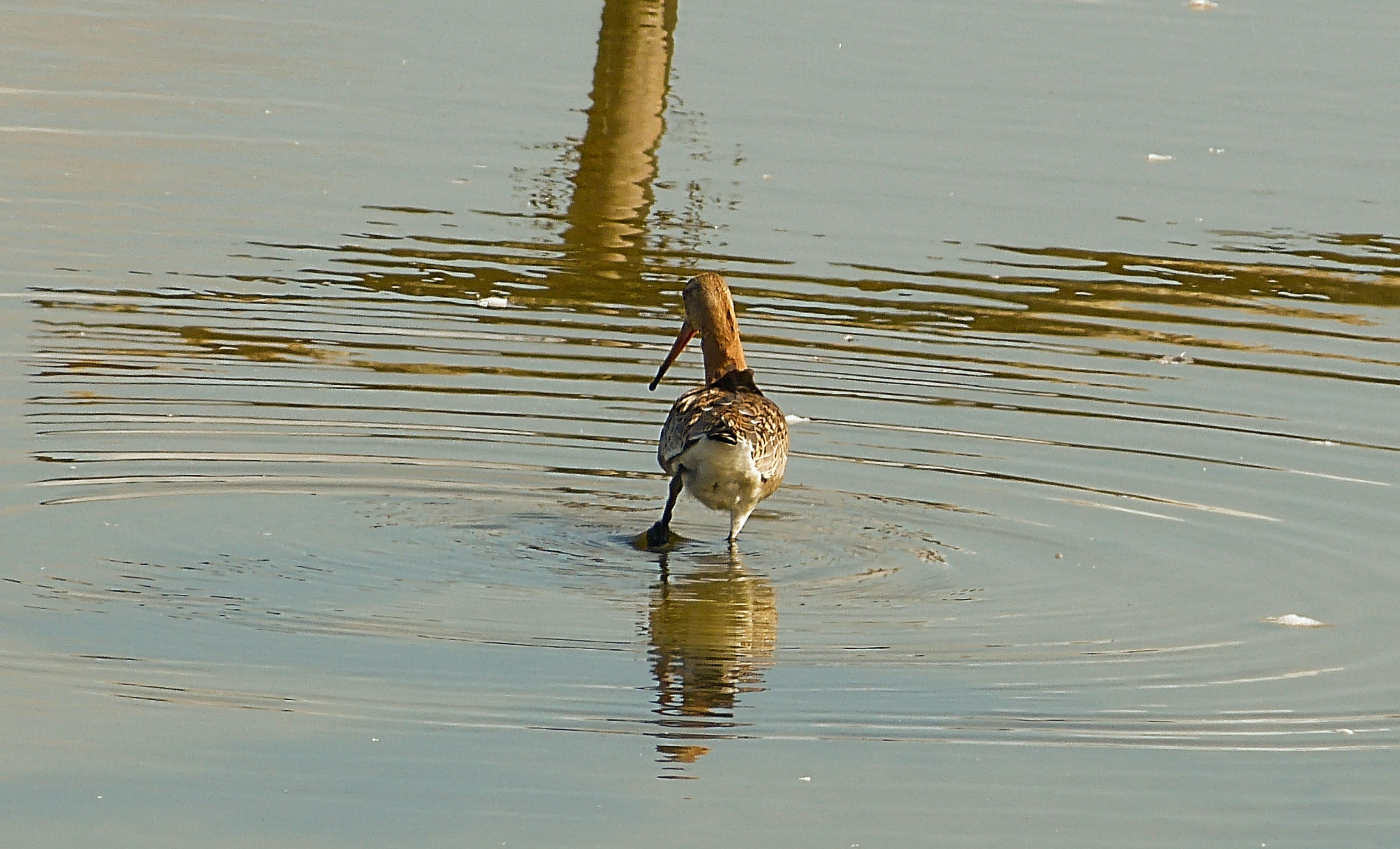
On a positive note, we had a good four hours here and were rewarded with a good variety of birds here on the reserve. Starting with the Lake itself; a large contingent of Coots had now replaced the waders; although on the north side of the Lake, there were a small flock of Redshank, a couple of Greenshank with them and closer by, a pair of Black-tailed Godwit. A pair of Great Crested Grebes swam among the Coot and close to the waters edge near the viewing platform, there were at least two Little Grebes fishing among the dead reeds. Matt and Emma turned up and while waiting for Geoff to arrive, we had sightings of a female Marsh Harrier, a female Kestrel, a male Peregrine and out in the fields with the Cattle, up to three Cattle Egrets could be seen through the telescope. A pair of Ravens then grabbed our attention as they flew high over the reserve and then headed off north.
Above and below, a Kestrel was hovering by the Lake.
Above, a Great Crested Grebe was among all these Coot on the Lake and below, a few waders were resting on the northern end of the Lake.
Above, one of many Grey Herons present on the reserve today and below, a Common Buzzard sailed overhead when we were watching from the seawall.
Above and below, this Little Grebe showed well fishing on the Lake.
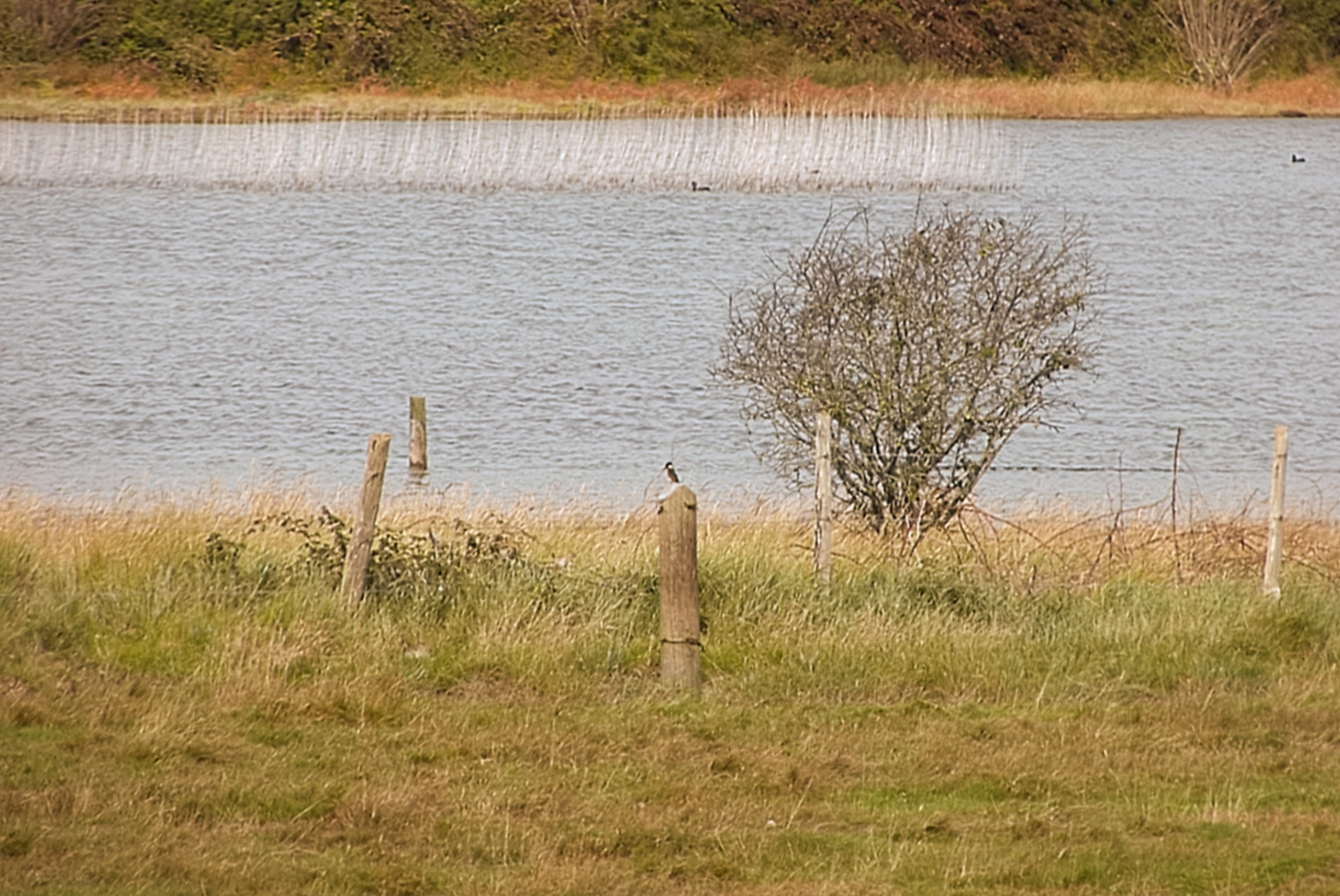
Geoff eventually joined us and after a brief chat, we made our way around the perimeter wall. We stopped to check out what the small passerine was on the wire fence, which transpired to be a male Stonechat. A female Stonechat then popped up and a Wheatear was seen further along the fence. A Whinchat was also found on the same stretch of fencing and now all three Chat species were on the fence together! Jason Crook then joined us for a chat and his version of events about the poor management on the reserve and while he continued to talk to Geoff, we all picked up a Kingfisher perched on a fence-post by the main Lake. The bird kindly entertained us for the next 15 minutes or so, flying up and down the area and was even seen catching a small fish and battering it against the fencepost! I even let a few interested people look through my scope to check out the Kingfisher.
Above, a Little Egret flying over the Lake and below, a distant Kingfisher entertained the small crowd gathered by the seawall.
Out in the harbour, the tide was going down rapidly and I found a group of 11 Harbour Seals resting on the mudflats south of the small islands and promptly put the guys onto the Seals. A Common Sandpiper soon entered the scene when it was first heard and then seen flying towards us and then back towards the Lake again. By the Point Field, a further three more Whinchats were seen along with several Meadow Pipits and the briefest of sightings of a Dartford Warbler flying into the brambles, but no further sign. A Yellow Wagtail flew overhead and landed in the Point Field and although I could hear it, the bird was not visible up until it eventually flew off towards the distant Cattle.
Some of the Harbour Seals out in Langstone Harbour.
The Deeps area was also an area of controversy with large hill-like mounds now in place. For what purpose, who knows? But they certainly looked unsightly as did the ploughed up field to the north of the Deeps. What the hell is going on here? The Deeps was literally void of any birds apart from a flock of Linnets and no waders whatsoever! There was no sign of any Ospreys or raptors on the islands out in the harbour, but another Wheatear was found in the field near the Blockhouse, as was a female Kestrel in the fields. We had good views of a Small Copper butterfly on the brambles; a species I have only seen a handful this year. Also, Common Blue’s, Small Heath, Small White and Meadow Brown’s were seen along the perimeter wall and a lone Red Admiral was seen further along the footpath. Both Common Darter and Migrant Hawker dragonflies were abundant on the reserve today and later in the day, Geoff told me that the Willow Pool, over in the south side of the Marshes, was holding Small Red-eyed Damselflies. Interesting.
Above, a Small Copper butterfly on brambles by the seawall. Below, a female Kestrel over on the east side of the reserve.
Finally, another look at the mess left behind by some utter idiots!!!!
We met up with three ‘Lazee’s’ on the seawall: Pete Gammage, Northern John and Andy Friend and while having a good chat about our respective sightings today, a Sparrowhawk was seen distantly soaring to the north of the reserve; our fifth raptor of the day.
A few waders that were on the Lake that included Redshank and a few Greenshank. This time last year, there would have been hundreds of waders on here at high tide!
One of the Whinchats in the Point Field. Unfortunately, my photos of the birds here were poor and so this one was taken by Emma Parkes.
Yet another clear blue sky overhead as I went about checking my Moth Box this morning at 6.45am. Even through the kitchen window, I could see anOld Lady moth and a few Willow Beauties by the Moth Box, which was encouraging and as Autumn progresses, I should be getting quite a few moths for my year list.
I am lucky to get a Bloxworth Snout in my garden as there is a small population here in Portsmouth.
Among the 62 moths of 23 species, I was fortunate to find another new moth for the year; my first Blood-vein of the year. The moth was actually behind one of my pot plants close by, but it looked like a nice fresh moth too. My second Double-striped Tabby of the year was on one of the egg trays inside the Moth Box. Yesterday’s Dusky Thorn was right at the bottom of my Moth Box and looked a little confused on where it was as I gently released it onto a nearby plant along with all the other moths in my Moth Box.
Only my second Double-striped Tabby of the year.
Other notable moths included another single Bloxworth Snout, two Old Lady moths and a Lunar Underwing. L-album Wainscot moths were in good numbers this morning with up 8 present; my highest number of this species this Autumn.
The moths present this morning included the following:
MACRO MOTHS:
Old Lady 2
Willow Beauty 5
Double-striped Pug 4
Lime-speck Pug 2
Lunar Underwing
Lesser Yellow Underwing 8
Large Yellow Underwing 6
Setaceous Hebrew Character
L-album Wainscot 8
Vine’s Rustic
Pale Mottled Willow 3
Bright-line Brown-eye
Blood Vein (New for Year)
Square-spot Rustic 6
Silver Y
Dusky Thorn
Bloxworth Snout
MICRO MOTHS:
Double-striped Tabby
Common Plume 3
Rusty-dot Pearl 3
Light Brown Apple Moth
Ruddy Streak
Box-tree Moth
A Chiffchaff was calling again in nearby gardens and overhead, small flocks of Meadow Pipits were heading east. I hope to go off to Farlington Marshes later this morning to meet Geoff down there. Could it be good?
The view from the Meonshore Hide overlooking the South Scrape.
Another very busy days birding with Geoff and Andy at a couple of locations today and with the weather being very nice, it was such a pleasure just being out and though we never saw any bird ‘year-ticks’ today, I certainly had a good day enjoying a few insects I have not seen before and some great birds too. The day kicked off with both mine and Andy’s Moth Box to check and then off to Hill Head to hopefully find the Wryneck that had been present for nearly a week. We rounded off our day for a visit to Catherington Downs to find the Elephant Hawk-moth Caterpillars that had been found the previous day by fellow ‘Lazee’ Andy Friend.
The Moth Boxes:
Left, my second Clancy's Rustic moth of the year and right, my first Lunar Underwing of the year.
Despite another very cold night, there were a good number of moths present this morning and my first Lunar Underwing of the year among a nice variety to look at. Another couple of half decent moths included my second Clancy’s Rustic of the year and my third Dusky Thorn of the year too. Sadly, very few micro moths this morning, but a much better haul than yesterday with 39 moths of 18 species.
A Dusky Thorn moth.
The moths present in and around my Moth Box included the following:
MACRO MOTHS:
Willow Beauty 5
Square-spot Rustic 4
Clancy’s Rustic
Lunar Underwing
Pale Mottled Willow
Large Yellow Underwing 7
Lesser Yellow Underwing 6
Broad-bordered Yellow Underwing
Setaceous Hebrew Character
Dusky Thorn
Bright-line Brown-eye
L-album Wainscot 2
Garden Carpet
Double-striped Pug
Lime-speck Pug
MICRO MOTHS:
Common Plume 3
Rusty-dot Pearl
Light Brown Apple Moth
While checking the moths, there was a bit of visible migration overhead that included a Yellow, Grey and Pied Wagtail flying over and a good number of Meadow Pipits headed westbound too. A Chiffchaff was still calling deep within the vegetation in nearby gardens. Could we be in for a good day with the birds?
Meanwhile, back at Andy’s garden at Cowplain Marsh, there was a much fewer number of moths present with just 10 moths of five species recorded. A Grey Wagtail flew low over the rooftops and a Chiffchaff was heard calling nearby.
The moths present here included the following:
MACRO MOTHS:
Angle Shades
L-album Wainscot
Square-spot Rustic 4
Lunar Underwing 2
Willow Beauty 2
Titchfield Haven Nature Reserve, Hill Head.
Above, a Dunlin came close to the Meonshore Hide. Below, Black-tailed Godwit settling down on the South Scrape.
The main reason we headed to Titchfield Haven was to hopefully see the long staying Wryneck that has entertained the crowds all week. However, come Saturday when most birders get the chance to hopefully see the bird, the bloody thing had gone!!! Despite a lengthy watch from near the Toilet Block looking north over the reedbeds and brambles, there was no sign of the bird. That's the negative side of things and now for the positives. The weather was perfect with a clear blue sky overhead and hardly any wind at all and with good numbers of Swallows flying overhead, surely something good would be found today?
Above, also one of the three Common Sandpipers came close to the hide. Below, Common Terns were on the South Scrape. A Sandwich Tern occasionally dropped in and landed among the Gulls on one of the islands.
Above, a Common Buzzard soared over the reserve and below, there was no sign of the Curlew Sandpiper, this Common Sandpiper was joined by a Dunlin.
Geoff kindly paid for my entrance fee to the reserve, which was very kind of him, as we had earlier enjoyed some very close views of the Turnstone by the roadside. The tide was up within the Solent as a few Sandwich Terns passed by, calling in doing so as we made our way along the footpath by the Meonshore Hide. Apart from a few Common Darter dragonflies and a Chiffchaff plus a flyby Great Spotted Woodpecker, all was quiet for at least around 20 minutes, so we retired to the Meonshore Hide. A Curlew Sandpiper, a species we have not seen yet this year, was seen on Thursday, but there was no sign of it this morning. Instead, there were up to 3 Common Sandpipers, 5 Common Snipe, with good numbers of Oystercatchers and Redshank plus 2 Ringed Plovers and a small flock of 6 Avocets. A healthy number of Black-tailed Godwit were on some of the islands among the Gulls.
This Kingfisher buzzed past the Meonshore Hide. The shutter speed on my camera just managed to grab the bird as it flew past. Below, one of many Black-tailed Godwit in front of the Hide.
Above, the female Marsh Harrier flew in sharply and grabbed a Moorhen before flying off north. Below, this juvenile Herring Gull photo-bombed this photo in front of a flock of Avocet.
A spectacular sighting of a female Marsh Harrier crashing onto a hapless Moorhen scattered all the birds and then chased off by Crows as it flew off northbound. Other raptors here included a Kestrel hovering nearby the Meonshore Hide and a Common Buzzard, first seen perched on a post near the reedbed and then sailed slowly south-west over the reserve. A Water Rail was persistently calling in the reedbed close to the Hide, but did not show itself. Suddenly, Andy got a text to say the Wryneck had been seen again and so grabbing our gear quickly, we rushed to the area by the toilet block.
Above, the flock of 6 Avocets flew over the reserve and below, the Great Green Bush-cricket Geoff found near the main road while we were waiting for the non-existent Wryneck to show.
Above, one of several Lapwing present today. This one was close to the Hide. Below, one of five Common Snipe near the Hide.
Above and below, some of the birdlife in front of the Hide.
Above and below, a variety of birds in front of the Hide.
Above and below, a showy Common Sandpiper in front of the Hide.
Above, a female Common Darter dragonfly near the Meonshore Hide and below, several Turnstone were close by the roadside.
From here, we joined the other birders, ever hopeful for the Wryneck to show, but as the morning wore on, knowing that it was a clear night, the chances of seeing it were slim. The message he received was erroneous for it was the sighting of the bird from yesterday that came through on Hants Birding! Though we never saw the bird, we had sightings of a superb Kingfisher belting past us and our first flock of 6 Wigeon of the season flying over the reserve. Best of all though was actually an insect. Geoff found a superb Great Green Bush-cricket nearby close to our feet, which not only was my first one for many a year, but the gathered birders also took a keen interest of this elusive insect. Migrant Hawker dragonflies also entertained close by too, darting back and forth across the reedbeds and brambles. As Geoff bought my ticket for the reserve, we stayed a while longer and made our way back to the Meonshore Hide, where we enjoyed more views of the waders mentioned earlier, plus a couple of Bearded Tits flying over the nearby reeds. During my time here, the light was absolutely superb and I was pleased with many of my photos taken this morning.
Above, one of the Common Sandpipers in front of the Meonshore Hide. Below, one of the two Dunlin present on the reserve is also in front of the same Hide.
Catherington Downs, near Clanfield:
Thanks to Andy Friend, I got to see my first Elephant Hawk-moth caterpillar.
Yesterday, Andy Friend found up to four Elephant Hawk-moth caterpillars here on Catherington Downs and seeing I have never actually seen the actual Caterpillar of this species, he kindly sent over a ‘Pin drop’ where he had actually seen them. So, after our trip to Titchfield Haven, we made our way northbound. Walking slowly towards the ‘Pin-drop, we eventually found (thanks to Andy Fisher for checking my film footage on what plants they were feeding on) the said Caterpillars. They were bloody huge! The Elephant Hawk-moth Caterpillars were on Rosebay Willowherb plants and we found the four that Andy had seen yesterday; which were my first ever.
Photos of two more of the Elephant Hawk-moth Caterpillars.
We slowly took a walk around the reserve and found a few bird species of note that included at least 6 Chiffchaffs and 4 Blackcaps. A Grey Wagtail flew over and at least four or five flocks of Swallows headed south low overhead. The whole area is in a valley and probably the site is very good for some visible migrationand also attracts a good variety of passerines on migration here.Andy recently saw his first Pied Flycatcher of the year here at this site. Other birds noted included a Common Buzzard and two distant Red Kites; a Nuthatch flew low over our heads and after a Jay was heard calling, it seemed to disturb two Tawny Owls that 'hooted' up in the trees. The Butterflies seen here were few and far between, but both Common Blue and Meadow Brown were noted.
Above, one of two Common Blue's here on the Downs and below, one of many Swallows pouring through over the site.
Above, Andy in search of migrants and below, a view of Catherington Downs looking south.
Notable sightings in Hampshire today included a Wryneck at Twyford Down and a flock of 13 Glossy Ibis dropped in briefly at Posbrook Floods this morning but most flew off northbound.