Friday, July 14, 2023

Moths, Bats and Birds.

Friday 14th July 2023.


My first Langmaid's Yellow Underwing of the year.

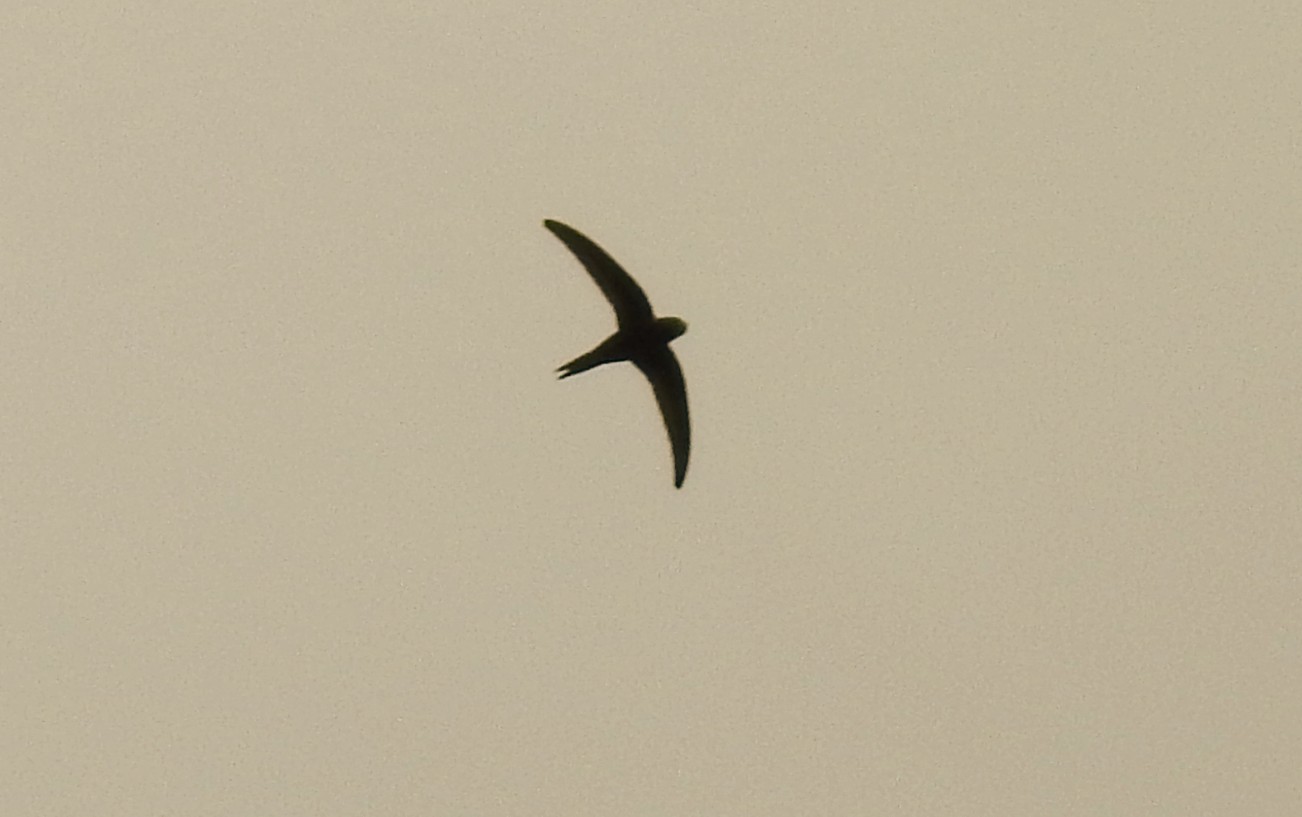
Last night, around dusk, I was drawn to the sound of calling Swifts that were so high up, they were practically invisible yet I could still hear them calling to one another in probably a tight flock. They are known to actually sleep on the wing and whether they spend all night flying or perch up under a rooftop somewhere, I am not so sure. Maybe the experts can enlighten me? Much closer to home were the Pipistrelle Bats that were hawking for insects just above my head; travelling from garden to garden then back again in impossible turns and angles in search of flying insects. Most entertaining and far, far better watching this than what my wife was watching on telly at the time!!! (Hate soaps!).


Common Footman. I have not had many this year so far.

Looking at the weather forecast over the next few days did not cheer me up whatsoever. Tomorrow is supposed to be both windy and very wet and Saturday is not looking all that great either. The ‘Lazee Birders’ could be organising a sea-watch from the Milford Shelter near Lymington on Saturday, but I have other plans I’m afraid. Though it does look good for pushing some interesting seabirds in. A Manx Shearwater was seen by a local birder off Hill Head earlier this week; a species I have not seen yet in Hampshire! Sadly, it looks as though the Roller on the Isle of Wight has departed (flown off!), leaving behind a few disgruntled birders who would have liked to catch up with this awesome bird. Maybe its in Hampshire somewhere waiting to be discovered? Yesterday, with returning waders making their mark along the south coast, a Pectoral Sandpiper was on Pennington Marshes.


Clancy's Rustic. This uncommon moth has been seen a few times in my garden this year.

This morning, it was grey and overcast, though hardly any wind and best of all dry first thing when I ventured outside into the garden at 5.10am. Rain was forecast at 6am and so I took a gamble and put the moth box on overnight. However, ten minutes into checking the box, the rain came in, but thankfully it was quite light.


Only my second Dark Sword-grass of the year this morning.

There were at least 46 moths of 28 species recorded today of which two were new for the year. One, a Langmaid’s Yellow Underwing (named after a good friend of mine, the late John Langmaid), after careful scrutiny in one of the moth pots; and the other was a micro that would not settle; a Mother-of-Pearl, which promptly flew off when I approached it. Boo! A few other good moths amongst them included a Least Carpet, Common Footman, Clancy’s Rustic and a Red-barred Tortrix.

The following moths were recorded this morning:

  • 1 Common Emerald
  • 1 Dark Sword-grass
  • 2 Brimstone Moth
  • 5 Silver Y   
  • 2 Riband Wave
  • 1 Common Pug
  • 1 Shuttle-shaped Dart
  • 1 Heart & Dart
  • 1 Least Carpet
  • 2 Lime-speck Pug
  • 1 Double-striped Pug
  • 3 Lackey
  • 1 Langmaid’s Yellow Underwing (NFY)
  • 1 Common Footman
  • 3 Bright-line Brown-eye
  • 1 Clancy’s Rustic
  • 1 Large Yellow Underwing
  • 1 Mother-of-Pearl (NFY)
  • 2 Rosy Tabby
  • 1 Dingy Dowd
  • 2 Yellow Oak Button
  • 1 Elder Pearl
  • 2 Garden Grass-veneer
  • 5 Light Brown Apple Moth
  • 1 Golden-brown Tubic
  • 1 Ruddy Streak
  • 1 Apple Leaf Miner
  • 1 Red-barred Tortrix


Above, the view from my Office window! The Royal Garrison Church standing below a leaden sky that was about to start to rain. It was a wet morning while I did my first shift and this afternoon does not look good either. The field is often used by School children during term time, though a few Gulls and Wood Pigeons currently rest there. There could be something interesting there during Autumn?


Matt Parkes kindly sent me this film footage of a Hummingbird Hawk-moth nectaring on Lavender in Alresford, despite the wet weather.


Tuesday, July 11, 2023

Two new moths for the year.

Wednesday 12th July 2023.


Two Least Carpet moths were present today.

A clear sky first thing this morning, with Herring Gulls making an awful din nearby and the light hum of a Buff-tailed Bumblebee nectaring on my Lavender plants sets the scene for another stupidly early morning forage in and around the moth box. Slightly cooler of late as well, with a light westerly breeze on a 16 degree centigrade temperature. Before checking the moth box, I put out the dried Mealworms for the House Sparrows to keep them away from my moth box for a while. I would have put the moth box on Sunday night, but the weather forecast predicted rain overnight and again, they were so wrong!


Marsh Dowd finally arrived to my moth box.

To the moths. To be honest, I was a little disappointed with the lack of moths, with hardly any at all within the moth box itself. The only good news is that my first Least Carpets of the year were present; one in the box and one outside nearby. Also, my first Marsh Dowd ( Blastobasis rebeli) micro moths of the year were present, close to one another on the white sheet.


Common Rustic agg. One of hardly any moths within the moth box. 

A total of just 31 moths of 19 species were recorded today, with most being micro moths, but at least there were moths to look at. Least Carpet is an irregular visitor to my garden and a good moth to record too, whereas the Marsh Dowd is also quite a scarce moth. It is from the island of Madeira and somehow, like a lot of the Blastobasis micro moth species, found its way to both Hampshire and West Sussex.

Moths recorded this morning included the following:

  • 3 Riband Wave
  • 1 Lackey
  • 2 Double-striped Pug
  • 2 Least Carpet (NFY)
  • 1 Lime-speck Pug
  • 3 Silver Y
  • 1 Heart & Dart
  • 1 Common Rustic
  • 2 Marsh Dowd (NFY)
  • 1 Common Plume
  • 2 Dingy Dowd
  • 1 Golden-brown Tubic
  • 1 Brown House Moth 
  • 3 Light Brown Apple Moth
  • 1 Box Tree Moth
  • 1 Rosy Tabby
  • 2 Ruddy Streak
  • 2 Garden Grass-veneer
  • 1 Barred Marbled

The Roller on Brading Marshes, Isle of Wight. The bird was always distant hence the photo. A top rarity that many a birder would love to see. Photo by Steve Fruin. 


Simply shocking!!

Tuesday 11th July 2023.

Hi guys. I know quite a few people are reading my blog, not just here in the UK but also all over the world (honestly!). I contribute to Birdguides who provide me with up-to-date coverage on what is being seen in the UK and also a good monthly magazine which I in turn, give to me elderly father to read. I also read the email sent to me on topics covered and it disturbs me that in a so-called civilised society, the persecution of raptors is still going on at an alarming rate.

As a Naturalist, Birder or simply lover of all things Nature; I for one enjoy watching and marvelling at any type of raptor when out Birding, but when you hear of the shocking discoveries by members of the public, RSPB and other organisatons, it beggars belief on some of the mindset and mentality of a few individuals on destroying something so beautiful. On top of that, it angers me immensely the penalties dished out by Judges and the inadequate Judicial System to these criminals. OK, probably in their eyes, the individual never hurt a human, therefore, just therefore give a pathetic bit of Community Service and a petty fine and I am sure  they will have learnt their lesson and will not do it again. Will we ever seriously get real justice for these crimes? Sorry to be pessimistic, probably not in my lifetime.

Yes, the jails are well overcrowded and it costs the taxpayer a lot of money to put criminals behind bars. Well, if we cannot jail the criminals, make them pay an enormous fine and confiscate all they have then name and shame them to the media. However, we live in this horrible ‘woke’ society and goodness knows what the pathetic few would think of this. I am so glad that everyone is getting on the back of the Water Companies and exposing the disgusting working behavior they have caused. I only wish the public would jump on the bandwagon in exposing what is happening on these Grouse Moors. 

These are just some of the horrific crimes that have been reported by Birdguides recently: 

Barn Owl killing.

Following an investigation by North Yorkshire Police, Leslie Shooter was charged with using an animal trap in circumstances for which it is not approved, causing a trap to be set to cause injury to a wild bird and causing unnecessary suffering to a protected animal. After pleading guilty at Scarborough Magistrates Court on 29 June 2023, Shooter was sentenced to a community order with 100 hours unpaid work requirement, as well as £199 of costs and surcharges. A worthy comment made by one reader of this incident ‘As ever. The sentence is pathetically inadequate. Is the problem with sentencing the guidelines or the fact that magistrates / judges come from a stratum of society that retains a feudal mindset and sees wildlife as disposable vermin to be killed at will?

Northern Goshawks killing.

A Gamekeeper has been given a 12-week suspended prison term after pleading guilty to 19 offenses in relation to the death of five Northern Goshawks in Suffolk. Francie Addison. 72, of Weeting, was sentenced to 12 weeks in prison, SUSPENDED for 12 months, after pleading guilty to the offenses, including numerous breaches of firearms license conditions, at Norfolk Magistrates Court on Thursday 29 June.

Chief Magistrate, Mary Wyndham, said the offences were dealt with in their ‘totality’ and that they were so ‘serious’ this  justified a custodial sentence. However due to Addison’s age and health, this was suspended!!!!! She said that the license condition breaches posed serious potential harm to others and members of the public. He was ordered to pay a paltry £1,080 compensation costs of the examinations of the Goshawks, court costs of £105 and a surcharge of £154. His firearms, ammunition and traps are aslos to be forfeited. WHAT A JOKE!!!!   

Red Kite killing.

A Red Kite was found near raptor persecution hot-spot in County Durham and has been confirmed as having been both shot and poisoned. The bird was discovered hanging in a tree near Stanhope Burn by a member of the public in October 2022. Its body was x-rayed and found to contain pieces of shot and when it was sent for official toxicology examination, the body was found to contain the highly toxic pesticides carbofuran and bendiocarb, which was confirmed by testing to the cause of death. Yet, I am sure the Police know exactly who the culprits are, but yet again, NOTHING WILL BE DONE!

I know it's not what I normally write about on my blog, but as written earlier, a lot of people read my blog and not only birders either. I got some nasty emails once because I was set totally against Wildfowlers and the Government's Badger Cull; but those Gutless Wonders would not meet me face to face to have their argument.

On a lighter note, dear readers, our celebrity Little Egret was by Canoe Lake this morning, totally oblivious of passers by, in search of prey by the edge of the Lake. It has become a hit on Social Media now. I just only hope it is given some respect by all that visit that part of Southsea. 


Sunday, July 9, 2023

A good array of insects over the Cemy.

Sunday 9th July 2023.


Starting to look a bit greener in the Cemetery after the rain of late.

The weather played a big part this afternoon, for the early showers this morning disappeared and bright sunshine interspersed with overhead heavy clouds brought out a large number of butterflies around Highland Road Cemetery this afternoon. It was most definitely T-shirt weather as I slowly made my way anti-clockwise, checking not just the birds, but also the plants and insects I came across today.


Above, Common Field Grasshoppers were seen and heard in good numbers today. Below, there were several Small Skipper butterflies on the wing today.


Above, Meadow Brown butterflies were skipping low over the grass with a few attracted to the Buddleia.

There were hardly any dog-walkers today for it seemed I had the whole place to myself (wishful thinking) and taking my binoculars along, I wanted to check the top of the trees for any possible Hairstreak butterflies. Many years ago, I found a White-letter Hairstreak fluttering about on the grass in the late summer and I have always thought they could possibly breed here. I shall keep my eyes peeled in future at the top of the trees.


Above, a Buff-tailed Bumblebee enjoying the Buddleia and below, a Drone Fly nectaring.


Above, the micro moth, Straw-barred Pearl on a Yarrow plant and below, several Swifts were seen overhead low over the trees.

Butterflies took priority today as a lot of the Buddleia were in bloom throughout the Cemetery. But first, there were the birds seen and heard today that included the following:

  • Great Black-backed Gull
  • Herring Gull
  • Black-headed Gull
  • Mediterranean Gull
  • Wood Pigeon
  • Feral Pigeon
  • House Sparrow
  • Robin
  • Wren
  • Goldfinch
  • Greenfinch
  • Carrion Crow
  • Swift
  • Blackbird


A Yellow-legged Mining Bee nectaring on Smooth Hawk's-beard flowers and below, a pair of Great Black-backed Gulls flying over the Cemetery.

Though most of the birds were passing over or just fleeting glimpses, the Blackbirds at least showed well, busy searching for food among the graves! Butterflies were in very good numbers here in the Cemetery this afternoon, most enjoying the many Buddleia flowers and allowing me a close approach to them. The following butterflies were seen this afternoon:

  • Red Admiral
  • Painted Lady
  • Small White
  • Holly Blue
  • Meadow Brown
  • Peacock
  • Comma

By far, both Red Admiral and Painted Lady were the most numerous butterflies of which were in double figures, plus I also got to see my first Straw-barred Pearl (Pyrausta despicata) of the year, with several seen as I walked on the grass and disturbed them. Thankfully, they did not fly far and allowed me some reasonable photos. Other insects seen today included Common Field Grasshoppers, which were abundant around the graves, picking up their striations calling within the grass.


Above, a Painted Lady and below, a Peacock butterfly.


Above, a pair of Hornet-mimic Hoverflies sharing the same Buddleia plant and below, a Holly Blue butterfly on the Bramble flowers.

The impressive Hornet-mimic Hoverflies (Volucella zonaria) were also abundant today and again, allowed me to get fairly close to grab a few photos of this amazing insect. Drone Flies were also in numbers too as well as the Syrphus species of Hoverfly. I also saw a large Dragonfly species, but all too briefly and can only assume it was one of the Hawker species. All in all, if you are an entomologist, I think you would have been in ‘Seventh Heaven’! Going back to birds, the big species at the moment is the adult Roller at Brading Marshes on the Isle of Wight. I was lucky enough to see the Roller at Broxhead Common in May 2013, but to see another one would be something else. I am glad some of the ‘Lazee Birders’ made the trip to see the bird. Birding pal, Geoff Farwell, took a walk around Farlington Marshes today and saw 2 Common Sandpipers, 20 Avocets, 2 Southern Hawker dragonflies, Common Darter and a Red-eyed Damselfly. He also watched an Emperor Dragonfly catch and devour a Red Admiral butterfly.


Above, this Buff-tailed Bumblebee was by my back kitchen door this afternoon.


Saturday, July 8, 2023

Some superb moths & Old Winchester Hill.

Saturday 8th July 2023


Only my second ever Tawny Shears was in my moth box this morning.

A muggy start to the day as I started to explore my moth box and the surrounding garden at 4.45am. There was an overnight heavy shower and even a rumble of distant thunder at some unearthly time during the night, but the garden was near bone dry when I checked the moths. There were some interesting moths this morning with several that were new for the year, which put a big smile on my face.


Above, Marbled Green and below, Tree-lichen Beauty.

At least 7 new moths for my year list this morning that included Tawny Shears (only my second ever), Marbled Green, Tree-lichen Beauty, 2 Brown-tail, Rufous Minor, Rosy Minor and the micro moth, Regal Piercer (Pamene regiana). A total of 76 species of 34 species were recorded this morning, which I was pleased with both the volume and variety today. The Tawny Shears had me stumped at first and so I put a photo on Hants Moths and it was identified, thankfully. A very smart moth. Both Marbled Green and Tree-lichen Beauty are regular moths to my garden as are Brown-tails, though both Rufous Minor and Rosy Minor are most probably ‘aggs’ that need dissection to be 100% certain. The micro moth, Regal Piercer is a smart little micro and not often seen in my garden. 


Above, Brown-tail moth and below, the micro moth, Regal Piercer.

It looks as though it is going to be a hot day today with possible thunderstorms lurking about. The moths present this morning included the following:

  • 1 Marbled Green (NFY)
  • 1 Tawny Shears (NFY)
  • 1 Tree-lichen Beauty (NFY)
  • 3 Common Emerald
  • 2 Brown-tail (NFY)
  • 1 Dark Arches
  • 1 Uncertain
  • 3 Pale mottled Willow
  • 4 Bright-line Brown-eye
  • 2 Silver Y
  • 2 Heart & Dart
  • 5 Riband Wave
  • 3 Common Rustic agg.
  • 1 Lackey
  • 1 Double-striped Pug
  • 1 Rufous Minor (NFY)
  • 1 Rosy Minor (NFY)
  • 1 Willow Beauty
  • 1 Brimstone Moth
  • 1 Codling Moth
  • 3 Box Tree Moth
  • 14 Light Brown Apple Moth
  • 1 Small Grey
  • 1 Golden-brown Tunic
  • 1 Ruddy Streak
  • 10 Garden Grass-veneer
  • 1 Dingy Dowd
  • 2 False Cacao Moth
  • 1 Fulvous Pearl
  • 1 Barred Marble
  • 2 Rosy Tabby
  • 1 Regal Piercer (NFY)
  • 1 Brown House Moth
  • 1 Diamond-back Moth

Back over Andy Fisher’s house, he also had the moth box on overnight and there was a total of 23 moths of 13 species, though a few did fly off when I turned some of the egg trays over. Hurrumph! There was just the one new moth for the year, the micro moth Pied Grey (Eudonia delunella) and also my second Knot Grass of the year, which was a really fresh individual. The following were recorded:

  • 1 Heart & Dart
  • 1 Knot Grass
  • 3 Uncertain
  • 5 Riband Wave
  • 1 Garden Carpet
  • 1 Mint Moth
  • 2 Garden Grass-veneer
  • 1 Pied Grey (NFY)
  • 1 Dingy Dowd
  • 1 Yellow Oak Button
  • 1 Codling Moth
  • 2 Brown House Moth
  • 3 Rosy Tabby


Above, the micro moth Pied Grey and below, my second Knot Grass of the year.


Though the early morning blue sky was replaced by a dark lead coloured sky overhead, I still fancied going up to Old Winchester Hill this morning and so with Andy onboard within the car, I went down to Drayton to pick up birding pal, Geoff Farwell. Arriving at the Old Winchester Hill Car Park around 9am, we slowly made our way along the footpath to the Fort area. Yes, the weather looked extremely ‘iffy’ and a few bolts of lightning overhead and loud rumbles of thunder, we knew we could be in for a bit of soaking! Thankfully, we stood under some trees along the footpath to avoid the worst of the rain and eventually, we got to carry on enjoying some superb birds and butterflies.


Above, Geoff and Andy check out the brambles and bushes for the large array of butterflies on show near the reserve entrance. The Building to their right hosted at least 9 Red Admirals resting on it! Below, one of many Chiffchaffs seen today. This was a singing individual by the main entrance to the reserve.


Above, several Yellowhammers were seen today and all were singing males too.

Our trip here kicked off with a Red Kite flying over the main road just before we turned off for the Car Park and several more showed very well during the day. Chiffchaffs were abundant too with several seen singing along the trees and brambles, while other warblers seen included a few Common Whitethroats feeding in the Rape Fields to the south and both female and male Blackcaps were seen in different areas of the site. A Raven showed briefly flying over the top of the Hill, while singing male Yellowhammers held territories at various locations here. While enjoying a spot of lunch from the bench by the Fort entrance, a male Kestrel was seen perched in a dead tree down in the valley below and seconds later, a pair of adult Mediterranean Gulls flew west over the Hill. Our third raptor of the day was a Common Buzzard soaring over the fields to the north of the Hill Fort. While sheltering from the rain under some trees, we noticed quite a few finches flying in and out of the Rape vegetation that included Linnets, Chaffinches and a few Greenfinches. Even a Yellowhammer flew in and out and landed close to where we stood. A Grey Heron was seen flying south over the Hill and probably would have been feeding at a nearby Fish Farm further to the north.


Above, Andy sharing a cup of coffee and below, a Red Kite came close by.


Above, the Red Kite sailed by effortlessly and below, one of many Red Admirals seen today. At least one individual landed on me briefly too!


The occasional flock of Swifts would belt past overhead and even a small flock of House Martins buzzed over. The most intriguing bird sighting today was when Andy spotted a Wagtail flying south near the main entrance, but on closer inspection, it was yellow, so we can only assume it was a Yellow Wagtail. However, the bird never called at all, whereas most flyby ‘Yellow Wags’ I see always call. So we are going to have to put this bird down as a possible. 


Above, my first ever Small Grass Emerald and below, the micro moth Common Marble.


Above, a Barred Straw moth and below, the thunder clouds were rolling in over the Hill.


It was not just the birds we were looking for, as we notched up a good total of 17 species of Butterfly and a few moth species as well. The pick of the butterflies has to go down to the White Admiral we found fluttering around the trees and bushes near the reserve entrance. Sadly, Andy never got onto the butterfly, but I was in no doubt of its ID. However, Andy did see his first Essex Skippers of the year. At the start of the trip, it was still rather damp and grey and butterflies seen were either flushed from the footpath or seen trying to settle in the long grass. However, when the sun eventually came out, butterflies were simply everywhere. Amazing stuff, especially near the Fort entrance and the bushes around the reserve entrance. Other butterflies seen today included the following:

  • Small Heath
  • Red Admiral
  • Marbled White
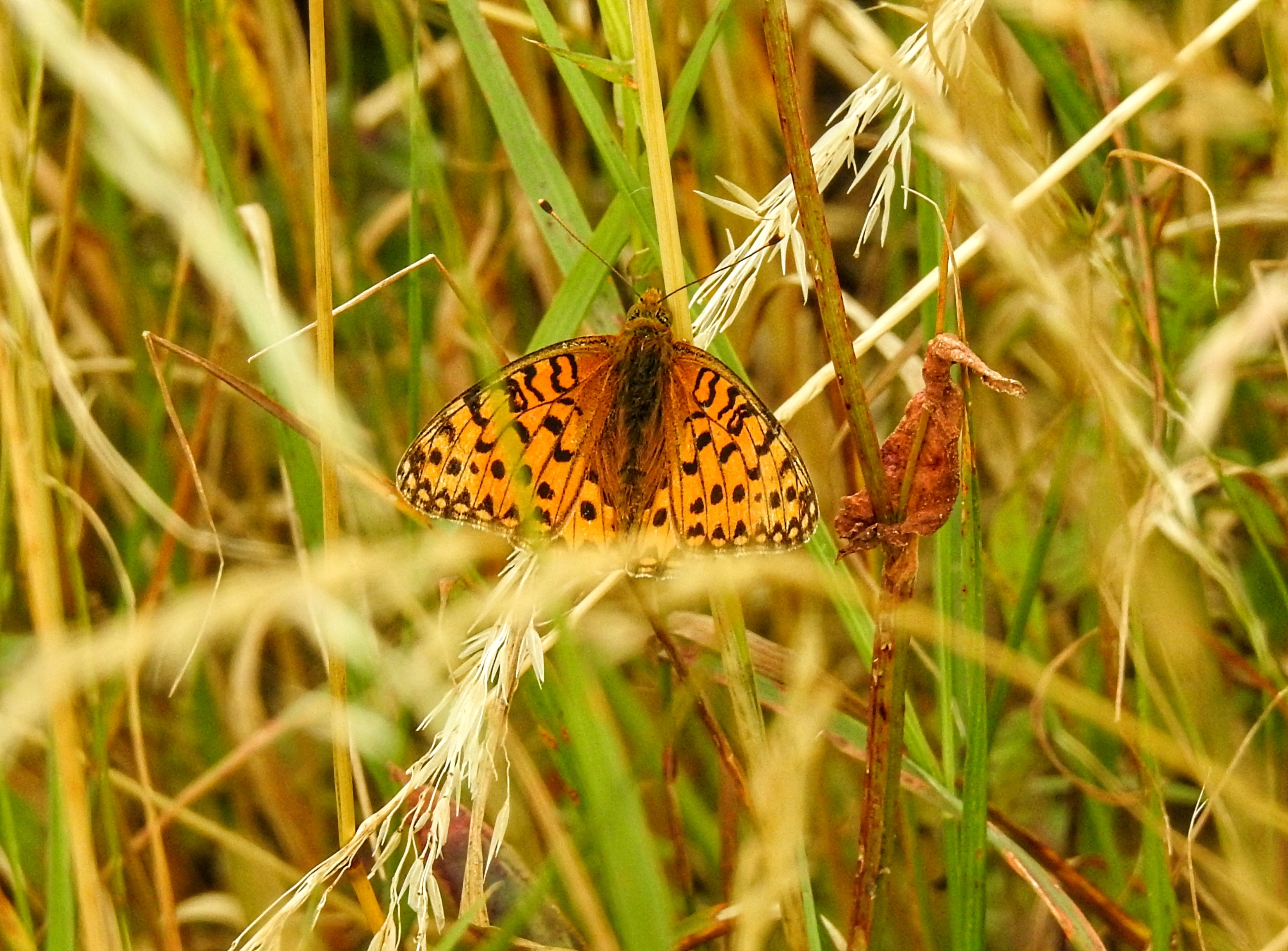
  • Dark Green Fritillary
  • Small Skipper
  • Essex Skipper
  • Gatekeeper
  • Painted Lady
  • Large White 
  • Small White
  • Ringlet
  • Small Tortoiseshell
  • Peacock
  • Brimstone
  • Ringlet
  • Comma
  • White Admiral

The moths seen on our trip here today kicked off superbly when my first ever Small Grass Emerald was seen fluttering around in the grass by our feet. I quickly potted the moth and concluded it was of the Emerald species, though I did not know what species at first and so discovered tonight it was actually a Small Grass Emerald. Happy days. Other moths present included a few Silver Y’s, the micro moth, Common Marble (Celypha lacunana) and my first Barred Straw of the year.


Above, this Marbled White butterfly had a few mites on it (red blobs) and below, I finally managed to get a photo of one of the Dark Green Fritillaries.


Above, after careful scrutiny, we were happy that this was an Essex Skipper and below, several Small Tortoiseshell butterflies were seen today.


Of course, Geoff was keeping an eye out for the plant life here and reeled off some really nice specialised chalkland plants that included Hedge Bedstraw, both Wild Thyme and Wild Marjoram, Wild Mignonette, Round-headed Rampion and Yellow Wort. Also, I was getting to ID with the help of Geoff’s expertise the likes of Wild Parsnip, Wild Carrot and Hogweed, that all look pretty much the same to the untrained eye. Dwarf Thistle was a surprise find of which Geoff explained how to ID this unusual Thistle. The only Orchids seen today were a few spikes of Pyramidal Orchid. All fascinating stuff to go along with all the superb species this amazing place has to offer.


Above, Geoff confirmed that this plant was in fact Bittersweet. Below, Round-headed Rampion, which is a speciality for Old Winchester Hill.


Above, Wild Mignonette growing near the south slope by the Fort and below, I found these Wild Raspberries growing close to the bench by the Fort entrance.


It did start to rain again around 2.30pm, but by then we were at the Car Park and so got back in the car. Geoff pointed out a road on the way here earlier that led to the hamlet of Coombe nearby and said that he regularly saw Little Owls down by the Farm Buildings here and so we took a look to see if we could see the birds. Sadly, there was no sign of the Owls, but we did see a Red-legged Partridge perched up on one of the stone walls there and several Stock Doves on the Buildings. I will try this place again when I am in the area.  


Above, several Painted Lady butterflies were seen today as well as the Comma's (below).


Above, I liked this capture of a Red Admiral on this Bramble flower.


Another nice selection of Moths.

 Friday 7 th August 2026. My first Yellow-barred Brindle for some time. Sunny but cool this morning in my Southsea garden as I went abou...