Sunday, August 11, 2024

Semipalmated Sandpiper & Denny Wood.

Saturday 10th August 2024.


The Semipalmated Sandpiper remained distant and so I highlighted where the bird was off Church Norton among Ringed Plover, Dunlin and Oystercatchers.

It was back birding with both Geoff and Andy today after a break of three weeks and we most certainly had a good day with a wealth of superb wildlife to look at within two destinations. I was hoping that yesterday's Rose-coloured Starling would reappear today, but it was not to be. Even birding pals, Emma and Matt Parkes went for the bird yesterday evening and it was sadly a ‘no-show’. So, the other good option was to go for my 3rd ever Semipalmated Sandpiper at Church Norton and then to check out Denny Wood in the New Forest for the reported Pied Flycatcher. The only thing that didn't play ball was the weather for I thought it was going to be a scorcher of a day…..well it most certainly wasn't in the New Forest! Not only were we in for an excellent ‘year-tick’ with the Sandpiper (which, incidentally, was a ‘lifer’ for Andy), but I also got to see my first ever Wood Crickets!

The Moth Box


Above, there was a surprise visit from this Migrant Hawker dragonfly and below, my first Tawny-fronted Straw micro moth of the year.

But first, I had a Moth Box to check out and was pleasantly surprised with a total of 51 moths of 28 species that included another new moth for the year, the micro moth Tawny-fronted Straw. Tree-lichen Beauty, Willow Ermine and a Copper-fringed Drab. It wasn't till I got home this afternoon when I found a Poplar Hawk-moth perched in the plant by the Moth Box and I identified a Copper-fringed Drab which I potted earlier to add to my day total here. A total of 51 moths of 28 species were recorded from my Moth Box today.


Above, my second Willow Ermine of the year and below, my second Poplar Hawk-moth for the year in my garden.

The moths present this morning included the following:

MACRO MOTHS:

  • Marbled Green
  • Poplar Hawk-moth
  • Uncertain
  • Cabbage Moth
  • Common Rustic
  • Willow Beauty
  • Garden Carpet
  • Pale Mottled Willow
  • Lime-speck Pug
  • Lesser Broad-bordered Yellow Underwing
  • Double-striped Pug
  • Garden Carpet 4
  • Brimstone Moth 9
  • Tree-lichen Beauty

MICRO MOTHS:

  • Common Plume 6
  • Common Masoner
  • Willow Ermine
  • Ruddy Streak
  • Black-banded Masoner
  • Light Brown Apple Moth 6
  • Garden Grey
  • Four-spotted Yellowneck
  • Apple Leaf Miner 2
  • Mint Moth 2
  • Italian Bark Moth
  • Tawny-fronted Straw (New for Year)
  • Brown House Moth
  • Copper-fringed Drab


Another insect surprise was this Supertramp Beetle, a species of Diving Beetle.

Last night, before retiring to bed, I had a quick check of the Moth Box and found a Migrant Hawker dragonfly perched on the white sheet behind the box! I reeled off a few photos and then called it a night. As I checked the egg trays within the Moth Box, there was the Migrant Hawker kind of fast asleep it seems, so I placed the egg tray near the box and after ten minutes or so, watched the insects vibrate its wings and then took off over the gardens. Another interesting insect I found on the white sheet was a Supertramp Beetle (Rhantus suturalis); a species of Diving Beetle. So, where is the nearest water for these insects to roam? My neighbour has a discontinued Koi Carp tank in his garden. From there perhaps?


My first Common Grass-moth of the year at Andy's garden.

I returned Andy’s Moth Box to him this morning which I had used in Devon and he kindly obliged to say that he left two outside lights on to hopefully attract some moths overnight. Apparently, he successfully recorded two more ‘year-ticks’ for me. The moths present included the following:

  • Black Arches
  • Willow Beauty
  • Grey Knot-horn (NFY)
  • Common Grass-moth 2 (NFY)
  • Common Plume


The micro moth Grey Knot-horn. Another new moth for the year.

Church Norton & Pagham Harbour, West Sussex.


Another distant photo of the Semipalmated Sandpiper among the waders off Church Norton.

Earlier today, there was a report that the Semi-palmated Sandpiper was at the back of the Ferry Pool and so we headed there first. Sadly, there was no sign of the Sandpiper, but at least 6 Avocet and two Common Sandpipers on the Ferry Pool along with about 25 Black-tailed Godwit. A quick check on Birdguides revealed that the ‘Semi-P’ was now in front of the benches off Church Norton; so we ‘hot-footed' it to this destination. We joined a small gathering of birders (including a few regulars here) who kindly pointed out where the Semipalmated Sandpiper was. The bird certainly looked good through the scope, but it was a little distant, feeding among a flock of Ringed Plover and a few Dunlin. This was my third time I have seen this species, with previous sightings being at Dairy Lane, Chichester (sadly, now a Housing Estate) and one on the Lake at Farlington Marshes.


Above, this Mistle Thrush was seen on our arrival to the Car Park at Church Norton. Below, a Gatekeeper butterfly enjoying a Common Knapweed within the graveyard.

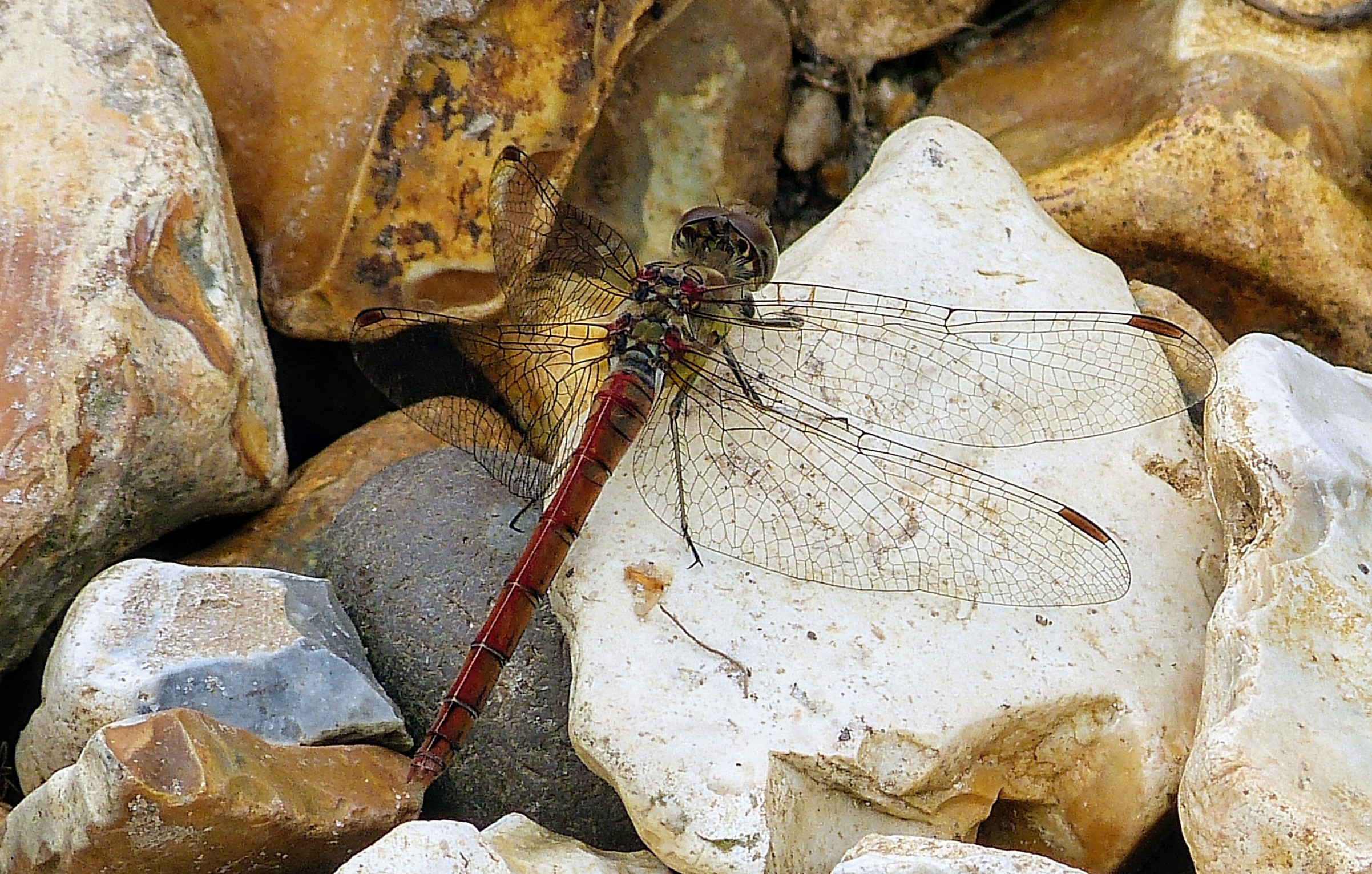
Other sightings in the harbour included Oystercatcher, Curlew, Redshank, Whimbrel and a few Sandwich Tern; while behind us, we could hear both Green and Great Spotted Woodpecker and a few Willowchiffs calling. Some Red Admiral butterflies were fluttering around by the bushes and a probable Migrant Hawker dragonfly flew overhead. 


Above and below, we took a walk inside St. Wilfrid's church and was amazed to see this beautiful stained glass window showing lots of birds.


Above, this Red Admiral butterfly posed nicely by the entrance to the Churchyard and below, this Common Whitethroat also showed well enjoying the Blackberries.

We then took a walk around the Graveyard and even had a look inside St. Wilfrids Church, which was open to the public today. Regarding the bird sightings here, there was quite a variety. Overhead, there was a large flock of House Martins hawking for insects and a few Swallows joined them also. Andy saw a Swift among them and a second bird was seen a little later on. A few Warblers were noted that included a showy Common Whitethroat feeding on the Blackberries; a male Blackcap and at least one Willow Warbler. A large flock of Titmice went through near the main gate that included good numbers of Long-tailed, Blue and Great Tit and several Warblers went through with them, which were most likely both Chiffchaff and Willow Warbler. I was sure I heard a Firecrest calling, but there was no sighting. A pair of Mistle Thrushes flew over and the Great Spotted Woodpecker put in a few appearances too, flying overhead.


The Common Whitethroat in the Church Norton graveyard.

Denny Wood & Bishop’s Dyke, New Forest.


The gorgeous view from Shatterford Car Park with the purple Heather showing nicely as far as the eye could see.

After picking up some breakfast at the Piggery Farm Shop, we made our way west. We got lucky with a Kingfisher flying over Beaulieu River, near Aldermoor Lodge, before we got to Shatterford Car Park and on arrival, there was a large Police presence here due to a lot of ‘Travellers’ being present opposite the Hotel. From Shatterford, it was still overcast and there was a cool breeze blowing over the purple Heather. You could of been fooled for thinking it was Lavender due to the colour of the flowering plants. Geoff pointed out THREE varieties of Heather here that included the smaller Common Heather and the more larger Bell Heather; but there was a third species, Cross-leaved Heather! I never knew there was a third species. The walk to Denny Wood produced a few Stonechats on the Heath, but sadly, we found a dead juvenile on the path. We couldn't see any sign of injury, so probably natural causes? A Meadow Pipit was calling and seen on the Heath close to the footpath and when we arrived on the outskirts of Denny Wood, there was a large flock of both Swallows and House Martins hawking for insects around the trees.


Above, Geoff pointed out this Lesser Gorse flower growing by the footpath and below, both Common and Bell Heather growing on the Heath.

We entered the Wood and took the footpath close to the edge of the woodland. Geoff picked up the stridulation of Wood Crickets and after a short time locating some, I couldn't believe how small they were. This was an insect ‘first’ for me as we found several in a small area, but, best of all, I now knew what they sound like and we soon discovered that they were in very good numbers throughout the woodland and even into Bishop’s Dyke. There was no sign of the Pied Flycatcher reported earlier today, but as we took the footpath leading to Bishop’s Dyke, we could hear the call of a Redstart nearby and eventually found the bird in a bramble by one of the small bridges. Stonechats here were in good numbers too, including a few juvenile birds. Looking east, the large pool in the distance held both Grey Heron and Little Egrets and at least six Mallard swimming on the water. On reaching the bridge where the Redstart had been, we checked out the insects swimming in the water below that included a Great Diving Beetle, Water Boatman and even some Pond Skaters. It was only a small area of water, but it can hold so much!


Above, a sad find of a dead juvenile Stonechat along the footpath to Denny Wood and below, a Meadow Pipit on the Heath.


Above, my first Wood Crickets were found within Denny Wood and below, Crossed-leaved Heather.

Walking through Bishop’s Dyke, we came across a large flock of Titmice again that included Coal, a couple of Marsh, Blue and Great Tits with a few Chiffchaffs among them as well. However, when we looked at the footpath, we found many holes in the sandy soil which seemed to go on for miles. Even a passer-by told us that she had seen these holes a long way back. We soon saw the owner of the holes coming in to land by their holes and they turned out to be the European Beewolf. I’ll be honest, I have never heard of them before now, but doing a bit of research (which I always do when I discover something new), they are a species of large Solitary Wasp that inhabit sandy locations including Heathland. However, there is a dark side to them as they hunt Honey Bees and we found quite a few carcasses of the Honey Bee and even some actually bringing in their prey too. Fascinating stuff. Nearby, we also found a Kite-tailed Robberfly sat on a large pebble near the Wasps.


The Redstart just before the entrance to Bishop's Dyke and below a Great Diving Beetle on the small pond by the same bridge. 


Above, one of several Water Boatman in the small pool and below, a male Common Darter on the footpath within Bishop's Dyke.


Above, the Kite-tailed Robberfly along the same footpath and below, a European Beewolf bringing in its catch, what looks to be a hapless Honey Bee.


Above, the European Beewolf at its entrance hole and below, another one with its catch.


Above, a Woodland Dor Beetle and below, the poisonous The Sickener toadstool.


Above, Geoff found this female Silver-studded Blue butterfly and below, Andy found this male Black-tailed Skimmer dragonfly on the footpath.

Exiting Bishop’s Dyke, another small flock of Titmice flew around the area by the small bridge that included another Marsh Tit. We found another Redstart seen distantly bathing and preening itself and incidentally, both birds looked good for being male birds. More Stonechats were seen on the heath near the Railway Line and a male Dartford Warbler was seen briefly flying over the bracken, but it was a very quick view. Geoff found a female Silver-studded Blue butterfly perched near the main footpath and a Woodland Dor Beetle was found on the same footpath. Two interesting species of fungi were found on our trip here that included a Grey Spotted Aminita Mushroom and the very poisonous The Sickener! Yet another great day with the guys, tiring, but what a variety of interesting wildlife today.


Friday, August 9, 2024

A stunning five minutes in my garden.

Friday 9th August 2024.


The Hummingbird Hawk-moth in my garden this afternoon.

I had 15 minutes in the garden this afternoon and while enjoying an Ice lolly, there was a magic moment of five minutes where my garden suddenly came to life with insects. It was a sunny afternoon with a breezy south-westerly buffering the trees and bushes behind my garden, but pleasant enough to just sit there and watch as a pair of Large White butterflies flew around the garden and shortly afterwards, a Red Admiral came in also to feed on my Buddleia plants.


Above, another photo of the Hummingbird Hawk-moth enjoying the Buddeia and below, the female Common Darter dragonfly taking a rest in the same bush.

Luckily, I had my camera to hand and as I was taking photos of the butterflies, a female Common Darter dragonfly flew in and landed on top of the fence and then took refuge in the Buddleia bush. Then, incredibly, a Hummingbird Hawk-moth flew in and also took full advantage of the Buddleia as I tried to get some half-decent photos of this extremely fast flying insect. My third butterfly species then came in to explore the garden, a Holly Blue! All this insect action in the space of just 5 minutes! 


Above, one of two Large White butterflies came into my garden and below, the Red Admiral seen too.

Meanwhile, I am now spoilt for choice (should they both hang around) in going to either Church Norton for the long-staying Semipalmated Sandpiper or the adult Rose-coloured Starling at Keyhaven Marshes! Two stunning birds that would easily grace anyone's year list. The weather is looking very good for the weekend and so I am looking forward to tomorrow, but not before I have the Moth Box on overnight.


The adult Rose-coloured Starling at Keyhaven Marshes this afternoon. Photo by Andy Tew.


Tuesday, August 6, 2024

Moth Box & Highland Road Cemetery.

Wednesday 7th August 2024.


The small and the large. A Black-banded Masoner micro moth next to a Jersey Tiger moth.

Despite a bright start to the day, the moth numbers were a lot lower than yesterday and nothing new in the Moth Box either to add to the year's tally. A couple of Jersey Tigers were present and probably yesterday's Garden Tiger and Canary-shouldered Thorn were present. The first Large Pale Masoner micro moth of the month was present and both Chestnut Tortrix and Rusty-dot Pearl added a bit of interest among the micro moths. There were 64+ moths of 28 species recorded today.


The Large Pale Masoner micro moth.

The moths present this morning included the following:

MACRO MOTHS:

  • Jersey Tiger 2
  • Garden Tiger
  • Canary-shouldered Thorn
  • Double-striped Pug 4
  • Lime-speck Pug 3
  • Common Rustic
  • Shuttle-shaped Dart 6
  • Willow Beauty 4
  • Brimstone Moth 5
  • Riband Wave
  • Pale Mottled Willow 3
  • Bright-line Brown-eye
  • Small Dusty Wave
  • Garden Carpet 5
  • Buff Ermine

MICRO MOTHS:

  • Apple Leaf Miner
  • Bird-cherry Ermine 5
  • Garden Grey
  • Chestnut Tortrix 2
  • Light Brown Apple Moth
  • Garden Pebble
  • Rusty-dot Pearl
  • Common Plume 7
  • White-shouldered House Moth
  • Large Pale Masoner
  • Black-banded Masoner 3
  • Ruddy Streak
  • Bramble Shoot Moth


A Candy-striped Spider was under the rainguard.

As I have written before, the Moth Box sometimes attracts different insects and this morning, a rather colourful Candy-striped Spider was resting under the rain guard. Apart from the noisy Herring Gulls, nothing flew over of note this morning.


The view from the second and new bench overlooking the Cemetery looking west.

This afternoon, my wife suggested we go for a walk and so I grabbed the dogs and we took a walk around Highland Road Cemetery. It has been a long while since my wife has walked around here and as she has dodgy knees currently, so we took a slow amble around the perimeter footpath.


An adult Lesser Black-backed Gull was a surprise while Becky and I were sitting on the bench. The bird did not linger, sadly and flew off westbound over the houses. Below, the Autumn fruits are coming out now including the Horse Chestnuts and the Blackberries from the many Bramble bushes here.

Again, it was very quiet for birds with the black & white Carrion Crow probably taking the highlight as I pointed out to Becky the various flowers growing here in the Cemetery. I think Becky was more interested in the gravestones and some of the very overgrown graves over on the east side. Some are literally covered in either trees, bushes or Ivy; but I explained to her that it is the responsibility of the families to clear the graves. Most of the graves here are over 100 years old and I suppose the families have either moved away or passed away!


Above, the only butterfly seen during our walk round was this Red Admiral and below, I pointed out this Lady Bedstraw plant to Becky who exclaimed 'you could be telling me anything on what it is!'. As if I would!

We did see the one butterfly, a Red Admiral that though flushed, returned to rest on a gravestone but eventually flew off, but not before I grabbed a photo of this attractive insect. We found the new Bench so Becky could have a rest. I picked out a large Gull flying off westbound over the Cemetery and using the camera, it was in fact an adult Lesser Black-backed Gull, The skies were looking quite dark over to the west and so we made our way back home.


The micro moth, Thatched Neb, that was on my kitchen ceiling yesterday evening.

Later today, I found an interesting micro moth on our kitchen ceiling and on close inspection, it was my second Thatched Neb (Bryotropha basaltinella). While cleaning the garden briefly, a macro species flew up which turned out to be a Plumed Fan-foot! It looks like a good year for them, it seems. A Straw Dot moth was found near the kitchen as well. 


I took this photo a few days ago in my garden which shows a Thick-legged Hoverfly on a Smooth Sow-thistle flower head. My wife was not happy with the plant growing in one of the plant pots, but I explained to her that any flower in our garden producing the food our insects can benefit from, should be encouraged.

In Hampshire yesterday, Keyhaven Marshes held both Wood and Green Sandpiper again and a Little Stint flew in early in the morning. The immature Black Tern was among the many Common Terns off Hill Head though over in West Sussex, Church Norton scored with a Semi-palmated Sandpiper seen on and off within the harbour and viewed by the benches.


Both quality and quantity moths this morning.

Tuesday 6th August 2024.


Only my second ever Golden Twin-spot.

An incredible array of moths greeted me this morning and I already had a taster from last night, when two Jersey Tigers were on the white sheet by the Moth Box. This morning, the Jersey Tigers increased to FIVE individuals and were also joined by a single Garden Tiger. It got better still, when I found my second ever Golden Twin-spot moth. This is a rare immigrant to the UK and there are not many Hampshire records either. My second Plumed Fan-foot of the year was also present and with FOUR more new moths for the year: Lychnis, Tree-lichen Beauty and the Micro moths, Sycamore Seed-dot and Garden Lance-wing were among the 88 moths of 39 species. I am sure there were more lurking away in the garden, but it took me 90 minutes to check all the moths.


Above and below, Jersey Tiger moths.


Above, my first Lychnis moth of the year and below, my second Plumed Fan-foot this year.


The moths present this morning included the following:

MACRO MOTHS:

  • Jersey Tiger 5
  • Garden Tiger 
  • Golden Twin-spot (New for Year)
  • Lychnis (NFY)
  • Plumed Fan-foot
  • Tree-lichen Beauty (NFY)
  • Willow Beauty 2
  • Shuttle-shaped Dart 5
  • Silver Y 6
  • Canary-shouldered Thorn
  • Pale Mottled Willow
  • Brimstone Moth 12
  • Lime-speck Pug 4
  • Marbled Beauty
  • Yellow-barred Brindle
  • Bright-line Brown-eye
  • Double-striped Pug 6
  • Small Dusty Wave
  • Large Yellow Underwing
  • Lesser Broad-bordered Yellow Underwing
  • Straw Dot
  • Garden Carpet 3
MACRO MOTHS:
  • Garden Grey
  • Mother of Pearl
  • Black-banded Masoner 2
  • Bird-cherry Ermine
  • Beautiful Plume
  • Sycamore Seed-dot (NFY)
  • Apple Leaf Miner
  • Dark Moss Moth 3
  • Common Masoner 2
  • Codling Moth
  • Garden Lance-wing (NFY)
  • Common Plume 2
  • Mint Moth 2
  • Rufous Pearl
  • Ruddy Streak 4
  • Garden Pebble 2
  • Light Brown Apple Moth 5


Above, the micro moth Sycamore Seed-dot and below, the macro moth, Tree-lichen Beauty. 

Always keeping an ear out for the birds, a Pied Wagtail and a Linnet flew over this morning while checking the moths. There are still a few Swifts flying around over the rooftops, but numbers of them are dropping. Believe it or not, I could actually hear the Green Woodpecker in Highland Road Cemetery ‘yaffling’. If there is no wind, I can hear the Woodpeckers on a still morning and even the waves crashing on the shoreline on Southsea Beach!


Above, the Wood Sandpiper on Pennington Marshes and below, a Green Sandpiper was present too. Photos by Rob Porter.


Both the Green and Wood Sandpiper together. Photo by Rob Porter.

In Hampshire yesterday, the large Hill Head Tern flock held both Black and Arctic Terns among the 400+ Common Terns and over on Pennington Marshes, a Wood Sandpiper was found with both Green and Common Sandpipers. The Glossy Ibis was again seen on Titchfield Haven.


Sunday, August 4, 2024

My Southsea Moths & Highland Road Cemetery.

Sunday 4th August 2024.


The stunning Garden Tiger moth was new for the year.

It was back home in Southsea that I put on the Moth Box and after clearing all the Spider webs from it, I was hoping to grab a few more new moths for the year. It was clear overhead when I put the Moth Box on and so it was first thing this morning. Up to 41 moths of 27 species were recorded although a few did fly off before I could ID them. Four more species were added to my year list that included the gorgeous Macro Moth, the Garden Tiger (an annual species to my garden in variable numbers) and three Micro Moths, the immigrant moth Rusty Acorn Piercer, a species I have not seen in my garden for many years, a Mint Moth and finally, the Brown Moss Moth. 


Above, the Brown Moss Moth and below, Yellow-barred Brindle.

Other notable moths included my second Yellow-barred Brindle and Cabbage Moth for the year in my garden and my first Black Arches in my garden this year.


Above, Rusty Acorn Piercer and below, a Mint Moth.

The moths recorded this morning included the following:

MACRO MOTHS:

  • Riband Wave
  • Yellow-barred Brindle
  • Buff Ermine 3
  • Cabbage Moth
  • Shuttle-shaped Dart
  • Garden Tiger (NFY)
  • Square-spot Rustic 2
  • Garden Carpet 2
  • Pale Mottled Willow
  • Double-striped Pug 2
  • Black Arches
  • Common Rustic 3
  • Silver Y 2
  • Lesser Broad-bordered Yellow Underwing
  • Canary-shouldered Thorn
  • Single-dotted Wave
  • Straw Dot
MICRO MOTHS:
  • Light Brown Apple Moth 3
  • Rusty Acorn Piercer (NFY)
  • Beautiful Plume 2
  • Common Plume 2
  • Brown Moss Moth (NFY)
  • Garden Pebble
  • Black-banded Masoner 3
  • Common Masoner 2
  • Garden Grey
  • Mint Moth (NFY)
  • Bird-cherry Ermine
  • Ruddy Streak
  • Chestnut Tortrix
Highland Road Cemetery:


Speckled Wood butterfly in the Cemy.

Though it was tempting to take a trip down to Hill Head for the Terns (a Black Tern was reported this morning), I took the dogs for a walk again around the Cemetery. This is my ‘local patch’ and although the birdlife is still rather quiet, there is always something to look at within this little ‘Oasis’ within Southsea. The plants, insects and simply just being there with my dogs is heartwarming to me personally and there is always the bonus of something unusual turning up. Autumn migration is slowly taking place, so there could be a Flycatcher or a Warbler lurking about.


Above, a Speckled Wood butterfly on the ground and below, a Meadow Brown blending into the background.


Above, one of several Red Admiral butterflies seen around a large clump Buddliea. Below, I eventually found a Meadow Grasshopper on one of the graves. They can be very difficult to see at times.


Today, the Green Woodpecker was heard, but not seen, again and with only a handful of species seen; I had to turn to the plants and insects which were abundant today. Starting with the insects, I recorded five species of Butterfly seen that included Meadow Brown, Gatekeeper, Small White, Red Admiral and a couple of ‘Blue’ butterflies around the Buddleia that didn't settle long enough to be ID’d, though I suspect they were Holly Blue’s. A Dragonfly species flew past at speed and headed south, but far too quick to ID. Good numbers of Batman Hoverflies were seen and some even landed on me! Both Meadow and Common Green Grasshopper were present as well. I can still pick up the sound of the Grasshoppers and thanks to birding pal Geoff Farwell, he has helped me identify them by their ‘stridulation’.


Above, Common Knapweed and below, Scarlet Pimpernel.


Above, Common Centaury and below, a Wood Pigeon chilling out.


Of the plants noted, I found a clump of Common Centaury by a grave, a species that I do not recall seeing here before. Both Hawksbeard and Cat’s Ear, sporting their bright yellow petals, were simply everywhere along the footpaths and a lot of the graves had a carpet of Scarlet Pimpernel flowers. The weather was gorgeous; bright and sunny with very little wind and therefore, a pleasant walk was had.


A brief Desert Wheatear in Hampshire & large numbers of Wood Pigeons on the move.

Tuesday 3 rd November 2026. Dawn over Highland Road Cemetery when I walked the dog this morning. Another bright start to the day although...