Sunday, May 26, 2024

Puss Moth and a superb trip to Martin Down.

Saturday 25th May 2024.


Martin Down is famous for many things, but the Marsh Fritillary has to be one of the most stunning butterflies it holds. Thankfully for us, there were many on the wing today.

What a day! Not only did I get some amazing moths by my Moth Box this morning, but a superb trip to Martin Down on the Hampshire / Wiltshire border with not only Geoff and Andy, but also joining up with Matt & Emma Parkes; a total of five pairs of eyes searching and finding some fabulous flora and fauna this fantastic site has to offer. On top of that, the weather was simply perfect, with blazing sunshine throughout most of the day and a nice breeze to keep the temperature just right. I simply could write chapter and verse on what we saw today, but I shall let a lot of my photos do the talking.


Above, the stunning Puss Moth. I never in a million years expected one of these amazing moths to arrive in my garden. I really felt privileged. Below, OK, not as stunning as the above moth, but a White-point in Spring is nothing to be sniffed at either.

The Moth Boxes:

I was up just after 5am this morning and still, thankfully, the local House Sparrows are leaving my moth box alone and not stealing a moth or two for their breakfast! My day kicked off with a stunning moth; it was my first Puss Moth ever in my garden and only my second ever (the last was by Andy’s moth box). The moth was perched nearby on our shed wall close to the moth box and I let the moth just rest there. What a stunning individual. There was also another first for the year, a White-point. This species is regular normally in the Autumn months, so to get one in Spring was exceptional for me. A total of 21 moths of 14 species were in my garden this morning which included the following:

  • Puss Moth (New for Year)
  • White-point (NFY)
  • Willow Beauty 3
  • Pale Mottled Willow
  • Brimstone Moth
  • Lime-speck Pug 2
  • Bright-line Brown-eye
  • Vine’s Rustic
  • Shuttle-shaped Dart 2
  • Garden Carpet
  • Mallow Seed Moth
  • Ruddy Streak
  • Light Brown Apple Moth 2
  • White Ermine 2

In Andy’s garden, there were much less number of moths present which included the following:


  • Treble-lines 4
  • Pale Mottled Willow 
  • WIllow Beauty
  • Brimstone Moth
  • Freyer’s Pug 2
  • Common Plume
  • Light Brown Apple Moth


Above, one of 4 Treble-lines moths by Andy's moth box.


Above, we found a few Nursery Web spiders basking in the sunshine on the Downs. Below, the large but beautiful Bloody-nosed Beetle.


Above, the caterpillar of the Lackey moth and below, this bush was one of several we found that was destroyed by the Spindle Ermine caterpillars.


Above, Mr Andrew Fisher about to get his coffee out and below, Matt and Emma Parkes arrive at our location.


Above, mating Mint Leaf Beetles on a Hawkbit plant and below, we found this Ashy Mining Beetle near its nest hole in the ground while were checking out the Burnt Tip Orchids.


Above, another pair of Mint Leaf Beetles mating; this time on a Rock Rose plant and below, the Springwatch cameraman checking on his equipment.

Martin Down, Hampshire / Wiltshire border:

Despite getting our directions slightly wrong in driving to Martin Down, we eventually arrived around 9.30am at the southern Car Park of Martin Down. Greeted with singing Skylarks, Blackcaps and Common Whitethroats; we were looking forward to a good day here enjoying all the site had to offer and what a variety of wildlife was present today. I suppose the only disappointment here was not seeing or hearing the Turtle Doves today, even though they were seen this morning by the lucky few early this morning. Matt and Emma had parked up in the north Car Park off Sellens Lane and eventually joined us around an hour later by the Fort area.

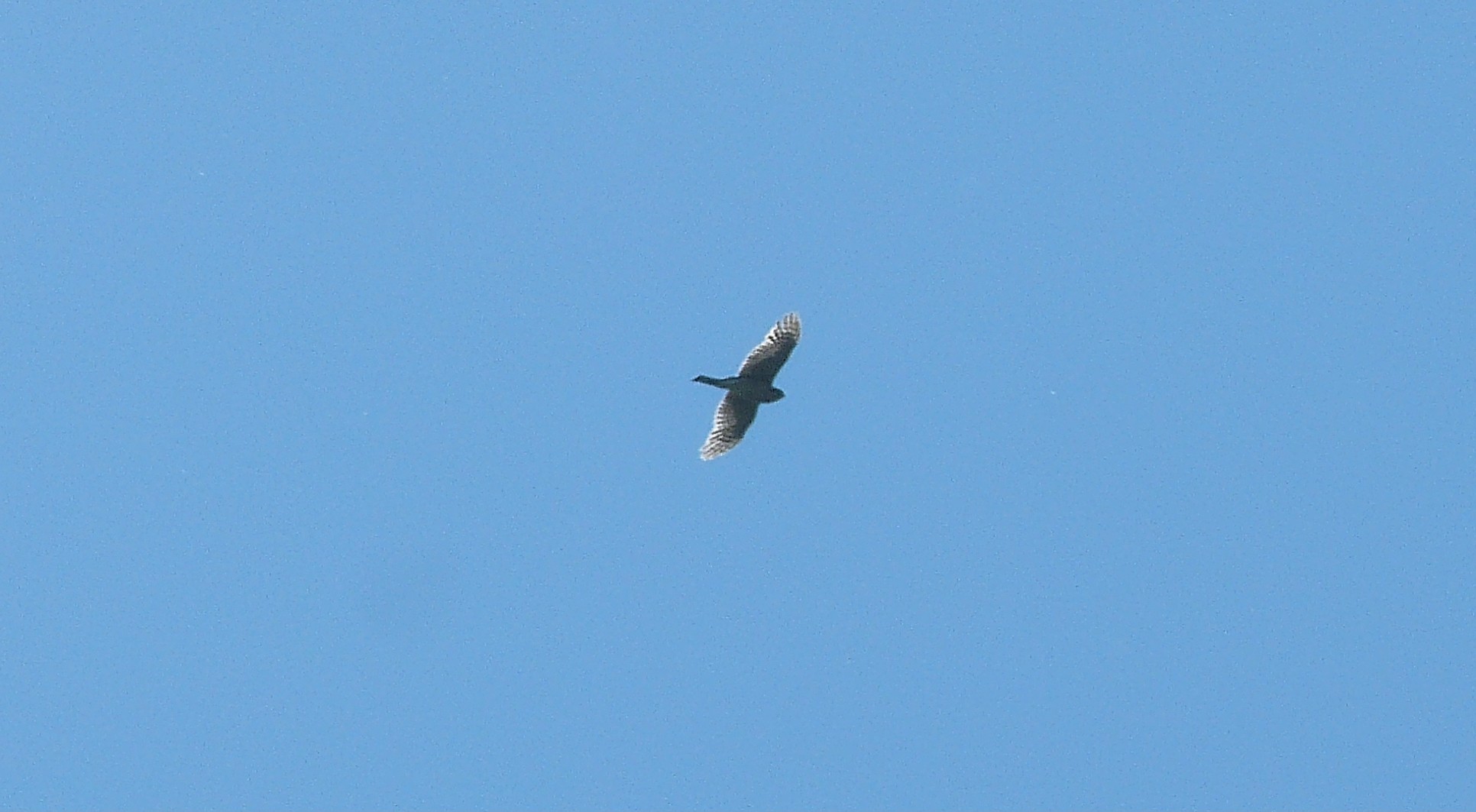
Above, Skylarks were abundant on the Downs and below, this female Sparrowhawk soared high overhead.


Despite not finding any Turtle Doves, there was still a great variety of birds to be seen here. Kicking off with the raptors, both Common Buzzard and Red Kite were seen in relatively good numbers and other raptors seen included a single female Sparrowhawk soaring overhead and several sightings of Kestrels. Skylarks were literally everywhere and the songs of them echoed all around us. From the main clump of trees and brambles near the car park, a Garden Warbler was singing its heart out though we never got a glimpse of the bird. Yellowhammers and Corn Buntings were in good numbers too, though the former easily outnumbered the latter by about 3 to 1. From the top of the mound looking west over to the Car Park, we had sightings of at least one male Bullfinch and a pair of Stonechats were nearby too. The latter species were abundant on the site with at least four, possibly five, pairs of birds on territories. I was lucky to pick out a distant Cuckoo flying east over the fields, but later in the afternoon, we saw a male bird calling nearer the north Car Park.


Above, a Corn Bunting was singing out on the Downs and below, I just about managed to grab a photo of this Tree Pipit on the northern end of the Downs.


Above, one of many Stonechats seen today on the site. 

Common Whitethroats were abundant too along our walk and also two different Lesser Whitethroats were seen. On the northern area of the site, a Tree Pipit was holding territory again in the same area as last year and showed very well for us while we took a break to have lunch. A cameraman from the Springwatch team was also here and after having a nice conversation with him, he kindly pointed out a Small Elephant Hawk-moth for us, which is a very good ‘year-tick’ for this species. As we neared the northern Car Park, we had sightings of a Chiffchaff, Raven and our first Swallow of the day! It looked as though a passing Common Buzzard had strayed into a pair of the same species territory as one bird grabbed the other bird by the talons and both went tumbling down to the ground, but stopped just short and unhinged themselves then flew off. Very spectacular! Again, no sign of any Turtle Doves today, but a great selection of birds seen. Earlier today, when Matt and Emma made their way across the Down, they heard a Nightjar actually 'churring' during the daytime too! Apparently, the bird had been heard all week calling in the morning.


Above, a Brimstone butterfly nectaring on Bramble flowers and below, one of many Dingy Skippers seen today.


Above, Small Blue's were abundant also and below, a Grizzled Skipper nectaring on a Rock Rose plant.

It was also a superb day for butterflies with 17 species seen that included the infamous Marsh Fritillaries seen in good numbers. We never saw one around this time last year, but we easily saw at least double-figures today. Two Green Hairstreaks were also seen along with both Grizzled and Dingy Skipper in very good numbers. The following butterflies were recorded on our walk today:

  • Large White
  • Dingy Skipper
  • Brimstone
  • Green-veined White
  • Small Heath
  • Small Copper
  • Painted Lady
  • Marsh Fritillary
  • Small Blue
  • Peacock
  • Green Hairstreak
  • Brown Argus
  • Grizzled Skipper
  • Orange Tip
  • Red Admiral
  • Common Blue


Above, an Adonis Blue was one of around three we saw and below, at least two Green Hairstreak's were seen.


Above, a Small Copper on a Rock Rose plant and below, a Common Blue.

Not only butterflies were present in superb numbers, but also a good selection of day-flying moths too. The Small Elephant Hawk-moth was a good spot as mentioned, but my first ever Small China-mark moth, which was found on the walk back to the north Car Park. The following moths found as well:

  • Common Carpet (New for Year)
  • Silver Y
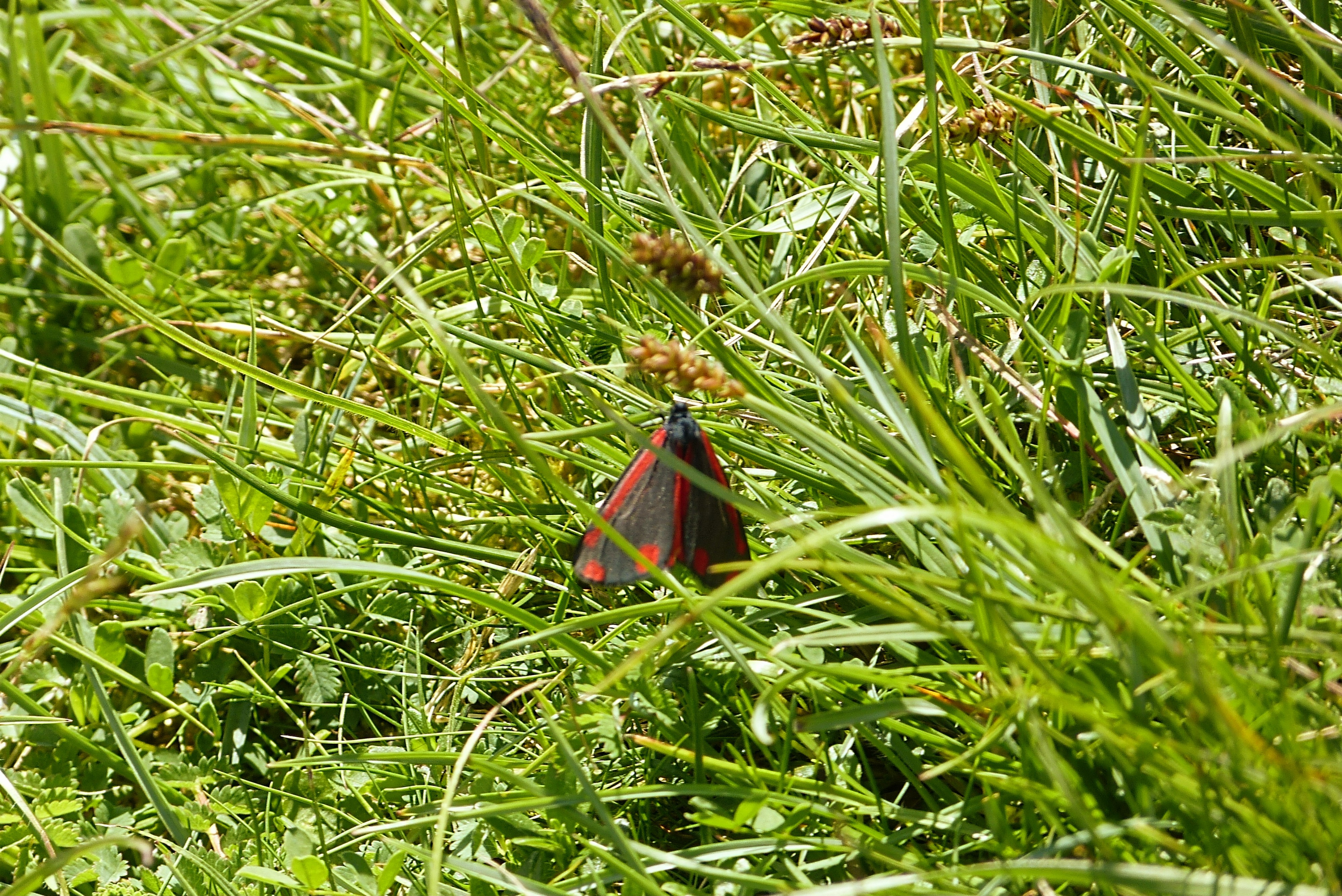
  • Cinnabar Moth (NFY)
  • Five-spotted Burnet Moth (NFY)
  • Six-spotted Burnet Moth (NFY)
  • Burnet Companion (NFY)
  • Small China-mark (LIFER)
  • Small Elephant Hawk-moth (NFY)


Above, one of several Cinnabar Moths seen today and below, Five-spotted Burnet Moths mating.


Above, we found an area with several Burnet Companion moths and below, the Small Elephant Hawk-moth that was pointed out to us by the Cameraman.


Above, my first ever Small China-mark moth.

Other interesting insects we came across included several Nursery Spiders basking in the sunshine on large leaves; my first Red-tailed Bumble Bees including a big Queen, plus great views of Ashy Mining Bees going into their nest hole on the ground near the Burnt-tip Orchids. Mint Leaf Beetles were in good numbers and a Bloody-nosed Beetle was found by Geoff walking along the footpath. A Lackey Moth caterpillar was also found by Geoff low in the grass. Having Geoff along is always a bonus as we glean the info off him to identify a lot of the plants that I have not got a clue with. The Orchids were abundant in places and this year, we had some gorgeous Burnt-tip Orchids of which Emma showed us where they were. There were also some fellow Naturalists present that were taking photos of not only the plants, but also the insects present too. With Geoff's help, we saw the following Orchids:

  • Common Spotted Orchid
  • Fragrant Orchid
  • Burnt-Tip orchid
  • Greater Butterfly Orchid


Above, Yellow Rattle and below, a Musk Thistle.


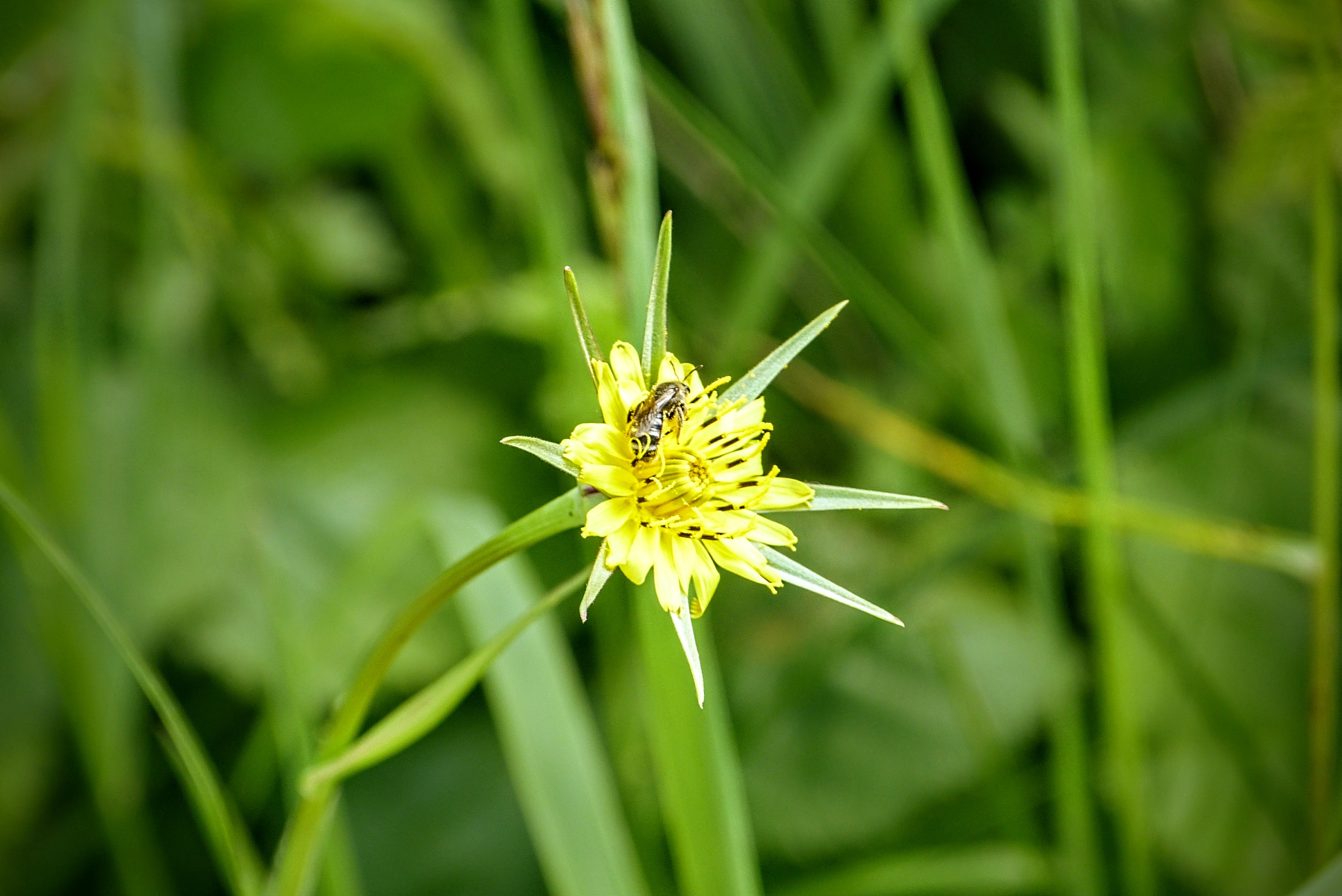
Above, Goatsbeard with a small Bee for company and below, Common Spotted Orchid.


Above, Rock Rose and below Horseshoe Vetch.

Other plants that Geoff pointed out included Goatsbeard, Rock Rose, Field Fleawort, Musk Thistle, Crosswort and both Horseshoe and Kidney Vetch plus many other more common plants. It's always an education when Geoff picks out not only the name of the plant but also a bit of information about the plant itself. Again, it's a good way of learning from the experts by simply pointing out and asking questions.


Above, Fragrant Orchid and below, Burnt-tip Orchid.


Above, Field Fleawort, which is a scarce plant and below, the gorgeous Greater Butterfly Orchid.

When we finally reached the north Car Park, Matt and Emma kindly offered us a lift back to the south Car Park of which we were so grateful. It was now 4.30pm and I knew I was in for a bad time for getting home late and it would have taken us easily another hour to get back to the car and my feet were ‘barking’ too! What a superb day and I could easily spend all week at this site, picking out various insects, plants and birds. We heard that a Red-backed Shrike had been found on Thursley Common, Surrey, this morning; but the lure of this place was far more enticing with all its wildlife it has to offer. Great day, great company and so glad to be alive to witness it all.


Thursday, May 23, 2024

Another new moth for the year.

Thursday 23rd May 2024.


My first Diamond-back Moth of the year. 

There was a bright start to the morning with a clear blue sky, though it was a bit cooler of late, first thing this morning. The moth box was on overnight and again, the moths were in double-figures again, with another new moth for the year. On my first shift this morning, I managed a quick walk to the Curtain Moat, while checking the birdlife and other fauna on the way there and back.


White Ermine moth.

The Moth Box:

There were just 15 moths of 9 species present this morning; this time last year, I had double the moth numbers! Pick of the bunch was my first Diamond-back Moth of the year; a common immigrant moth from the Continent that can vary in numbers here on the south coast. But apart from a couple of Brimstone Moths, it was just single figures for the rest of the species seen.

The moths present this morning included the following:

  • White Ermine
  • Willow Beauty 6
  • Brimstone Moth 2
  • Pale Mottled Willow
  • Bright-line Brown-eye
  • Freyer’s Pug
  • Lime-speck Pug
  • Diamond-back Moth (New for Year)
  • Narrow-winged Grey


Above, this Harlequin Ladybird was one of several I saw this morning along the footpath while walking to Curtain Moat, below.

Pembroke Road, Old Portsmouth:

I got up to 14 species seen during my time there on my first shift and having arrived earlier than expected, I took a walk with my new binoculars down to Curtain Moat; checking the plants and insects on the way and enjoying a total of 5 Pied Wagtails on the Bowling Green and the cacophony of lots of juvenile Starlings chasing their parents to be fed. The purple Mallow flowers were new in bloom along the footpath and the Beaked Hawksbit was still on show by the Moat Wall. I was saddened to see so much garbage within the moat, that included some kids Crabbing line floating on the water. Mute Swans and Cormorant regularly are on the water here now and then and can easily get tangled up in all that crap! At the western end of the Moat, there was a lot of floating litter accumulated and I just might give the Council a ring to see if they could clear it. They have spent millions of taxpayers money on renovating this area and this is how some of the sick public thank them. 


Above, Valerian was growing abundantly along the footpath wall and below, Mallow plants were now in bloom.

On a positive note, the holes along the walls of the Moat are used for nesting purposes for the local Starlings, House Sparrows and Feral Pigeons here. I scanned the Solent several times but nothing of note going past. While in Pembroke Road, a gorgeous Swallow flew low over the road and shortly afterwards, a pair of Swifts belted past. A Great Tit came down to one of the nearby pot plants in search of insects, which was about 20 feet away from me. While enjoying my Salad lunch at home around 1pm, a soaring raptor was seen very high up, but by the time I had grabbed my binoculars from upstairs, it had simply vanished. I am sure it was a Common Buzzard, judging by its size and the shape of the bird. So now, I have put a pair of binoculars on the window sill and hopefully will not be making a mad dash through the house in finding a pair!!


As always, I like to add some excellant photos from my birding pals and above, this Common Tern was seen flying over Pennington Marshes. Photo by Emma Parkes. Below, the pair of Roseate Terns on Normandy Marshes with a Common Tern in the background. Photo by Graeme Loader.


Tuesday, May 21, 2024

Cabbage Moth was new for the year.

Tuesday 21st May 2024


My first Cabbage Moth of the year. The moth was just starting to vibrate its wings when this photo was taken and eventually flew off strongly.

A much cooler day with a slight northerly wind keeping temperatures down below 20 degrees. There is the possibility of heavy showers later today as well, with thunderstorms further north in the UK. The Moth Box was on overnight and so I was up around 5.30am checking out if there was anything new for the year among a small haul of moths present. Old Portsmouth hosted a good number of Swifts on my first shift early this morning too.

The Moth Box:

A total of 21 moths of 13 species were present early this morning of which the Cabbage Moth was the first one of this species for the year. However, it had got caught on some spider's web and so I carefully released it and eventually, it flew off strongly. All the usual species were present this morning including up to 5 Willow Beauties.

  • Cabbage Moth (New for Year)
  • Brimstone Moth 3
  • Pale Mottled Willow
  • Willow Beauty 5
  • Common Pug 
  • Freyer’s Pug 
  • Lime-speck Pug
  • Shuttle-shaped Dart
  • Bright-line Brown-eye 3
  • Light Brown Apple Moth
  • Ruddy Streak
  • Narrow-winged Grey
  • White-shouldered House Moth


Freyers Pug. Currently, a regular moth in my garden.

Pembroke Road, Old Portsmouth:

Up to a dozen Swifts were circling and screaming high over Pembroke Road when I arrived at 8am this morning (I counted about 18 birds high over my house later in the morning), which is always a pleasing sight. Again, nothing out of the ordinary in Pembroke Road this morning, but nice to watch all the young Starlings following their respective parents over the rooftops and also on Governor’s Green. Three species of Gull were seen here this morning, which included Black-headed, Herring and Great Black-backed Gull.


Above, a secretive Fox. Photo by Emma Parkes and below, a female Banded Demoiselle damselfly. Photo by Matt Parkes.

Later this morning, while driving up to the Dentists in Waterlooville there was a sighting of a Kestrel hovering some 50 feet up over in a field opposite the London Road. A Turtle Dove was seen by a fellow ‘Lazee Birder’ on Martin Down this morning and over the past weekend, a female type Montegue’s Harrier was seen by a few ‘Lazee’s’ over near Pig Bush and then onto the heath by Shatterford.


The Turtle Dove at Martin Down today. Photo by Andy Tew. Below, young Avocets. Photo by Rob Porter.


Monday, May 20, 2024

Little Owl at South Boarhunt.

Monday 20th May 2024.


The Little Owl finally came out of hiding and showed well in the farm.

Tonight, being such a clear and still evening, I thought I would take a trip to Manor Farm at South Boarhunt for the Little Owl and after ‘dipping’ on the bird earlier in the year and birding pal Andy Fisher catching up with the bird last week,it was time for me to try my luck again. Yes, the weather was good and so leaving my house at around 8pm, I arrived around 8.30pm within the car park by St. Nicholas Church overlooking Manor Farm and then played the waiting game for the next 30 minutes.


Above, one of a pair of Red-legged Partridges that showed well during the time I was there and below, a view of the countryside adjacent to Manor Farm.

In that time, a pair of Red-legged Partridges entertained as they explored the farm and the neighbouring area and made all sorts of noises. A Great Spotted Woodpecker flew over as did a male Kestrel low over my head and within the farm, a pair of Stock Doves were seen flying in and out of a tall Conifer. A Yellowhammer was heard singing somewhere in the distance and even a Tawny Owl called a couple of times from the trees somewhere behind me. Sadly, a no show from this bird.


Above, this Mayfly was my first for the year, but I did not expect one to be here. Below, another photo of the Little Owl within the farm.

As the light faded, I eventually saw the Little Owl fly across and land in a small tree and after five minutes or so, it flew across and landed on a shed roof and remained there for the next 15 minutes. I watched the bird checking out the area, spinning its head left and right to check out anything that might look like a nice meal. Patience paid off and a fine bird to climb aboard my year list. A Mayfly was buzzing around my car and settled a couple of times on the windscreen while I was waiting for the Owl.     


Beet Moth added to my Moth Year List.

Wednesday 2 nd September 2026. It has been a good couple of weeks for Vestal moths in my garden. Another bright start to the morning wi...