Friday, June 2, 2023

My first trip to Thorney Island this year.

Friday 2nd June 2023.


A male Common Whitethroat greeted me at the start of my walk on Thorney Island.

I went over to the ‘dark side’ this morning and took a walk along the west side of Thorney Island for the first time this year. Yes, I have been birding only in Hampshire all year, but seeing that this area of Thorney Island is a good bet to see a Lesser Whitethroat (not seen or heard one yet this year), I thought what the hell, let's give it a go. Of course, there was no sight or sound of one, but it was most certainly a cracking trip to this side of West Sussex with a variety of birds and nature to look at during the couple of hours I was there.


Above, a Buff-tailed Bumble Bee nectaring on Hemlock Water-dropwort. Below, the Little Deeps.


It's not just the birds that grab my attention when I am out on a walk. Insects and plants come a close second. This tiny Thick-legged Flower Beetle with its metallic green body was enjoying the fruits of a Cats Ear plant.

The trip here started nicely with a singing Common Whitethroat perched on a bush by the main track leading to the seawall on the west side of Thorney Island, while nearby, I could hear both Reed Bunting and Reed Warbler singing in the large reedbed to the south of the footpath. Sadly, as always here, there was dog poop all over the place along the path due to irresponsible dog owners, so I had to watch my step. I rarely walk fast along this path as there is so much to look at and not just birds. In fact, there weren't that many birds along the path, but plenty of plants and insects to look at.


The female Marsh Harrier over the Little Deeps and below, a singing Reed Warbler was also seen here. When the Reed Warblers first arrive in the UK, they tend to sing quite low and out of sight within the reedbeds, but when they are established in their territories, they are happy to go to the top of the reeds. 

There were plenty of buttercups around including the bright yellow Bulbous Buttercup , Hemlock Water-dropwort and Mallow growing along the path and great swathes of Yorkshire Fog grass grew along the edge of the path. Dog Rose bushes were also in bloom and looking quite stunning in the sunshine that attracted Buff-tailed Bumble Bees to their flowers. I stopped briefly to watch a female Marsh Harrier hunting over the reedbeds south of the footpath, lazily twisting and turning and then gliding gracefully over the Little Deeps area until disappearing from view. A few Swallows headed north and several Swifts were seen hawking in the blue sky above.


Above, another photo of the showy Reed Warbler by the Little Deeps and below, a Thick-legged Flower Beetle nectaring on a colourful Dog Rose. This particular bush was growing on the embankment near the Little Deeps and stood out against the dark surrounding grass.


Above, several Swifts were hawking for insects over the Island and seen in small flocks.

I had a quick look at the harbour where the tide was almost at its highest, but little of note when it came to the birdlife, so I promptly made my way down to the main footpath leading south to the Great Deeps. Another Common Whitethroat was seen singing as I made my way down the footpath leading to the Little Deeps. The bench on the harbour wall was very inviting and from here, I could see at least three species of raptor that included two Marsh Harriers, one Common Buzzard and a hovering Kestrel in the same field of view to the east of the island. Another small group of three Swifts flew over all heading north, though on the Little Deeps, there was very little bar, one Little Grebe and a sleeping drake Tufted Duck. A singing Reed Warbler popped up on top of the reeds and showed well, but a singing Cetti’s Warbler remained typically hidden. A nice surprise was a Common Sandpiper that took off from the Little Deeps then flew over into the harbour and then headed off south low over the water.


Above, this male Meadow Pipit came down to park itself on a nearby bush after 'parachuting' to proclaim its territory. Below, a large clump of White Campion was growing by the Great Deeps.


Common Cats-ear (also known as Flatweed) was abundant along the footpath, which is a good food source for the insects.

I admired the many flowering plants along the footpath down to the Great Deeps that included Smooth Tare, Hoary Cress, Hop Trefoil and Common Cats Ear that was growing along the harbour wall and along the edge of the footpath, which in turn attracted a good number of Thick-legged Flower Beetles that took full advantage of the flowering plants. Despite a good lengthy walk, I only saw just one butterfly, which I think was a Common Blue, but took off before I could get a good look at it. Out in the Gorse fields, both Linnets and Goldfinches were abundant and both Skylark and Meadow Pipits were seen singing over the fields.


Above, a lone Ringed Plover on the Great Deeps was soon joined by a single Oystercatcher. Waders were at a premium today, though a few non-breeding birds were around. I did see quite a few Oystercatchers out on the Saltmarsh within the Harbour.

On reaching the Great Deeps, I checked out the bird life present that included at least 8 Common Terns flying low over the water. Some flew out over my head and into the harbour while the others flew east towards the new Tern Rafts present. I didn't have my scope with me and so I was not sure what was nesting on the rafts, but with this many Common Terns here, I assume they are nesting on them? On the nearby stretch of shoreline mud, singles of Oystercatcher and Ringed Plover were found and on the south side of the Great Deeps, both Little Egret and Grey Heron were stalking the shallow water close to one another. A few Shelduck swam on the water and out on the fields south of the Great Deeps, two Roe Deer were grazing.


Above, a pair of Roe Deer were seen grazing out in this field south of the Great Deeps and below, a fishing duo of Little Egret and Grey Heron also at the same location. The Grey Heron soon flew off, leaving the Egret to fish alone.


Above, the Tern Rafts on the Great Deeps. This is a new sighting for me and I'm really pleased that some good conservation work is taking place here. This brilliant island has so much to offer when it comes to wildlife that is so abundant here.

The walk back was pleasant enough, but now I was facing a breezy northerly wind, though it was nice once the sun reappeared from behind the few large clouds. On reaching the Little Deeps again, a Sedge Warbler was now in full song and showed well enough for me to grab a few nice photos. The footpath leading back towards my car held a singing Chiffchaff perched high on an overhead wire, while a family of Common Whitethroats were skulking about in the hedgerows near me including a couple of youngsters quivering their wings to be fed and a male Reed Bunting was observed flying over the nearby reedbeds and then land in a tree at the end of the path. Nearing the end of the footpath, a large Dragonfly landed on the ground and though a bit distant, I was sensible enough to grab a few photos of which I have now identified as a male Black-tailed Skimmer Dragonfly.


Above, one of the Common Terns climbing out of the water within the harbour and below, the singing Sedge Warbler by the Little Deeps that showed very well on the opposite side of the footpath.


Above, a female Helophilus pendulus Hoverfly on a Common Cats-ear flower. Believe it or not, this Hoverflies common name is The Footballer! Such a striking Hoverfly that I just had to photograph it.

I got the heads up from fellow ‘Lazee’ Mark Francis that there were up to 6 Black Terns now feeding among the Gull flock within the Solent; seen from the Brownwich area of Gosport. I am tempted to go to view them later today, but we shall see as I am absolutely knackered. It's not easy getting up at 4.45am; but ‘no pain then no gain’ as they say!  


Above, this Chiffchaff was seen along the footpath back to the car as well as this (below) male Black-tailed Skimmer Dragonfly. This was the first Dragonfly species I have been able to photograph this year. Hopefully, more to come later in the year.


Thursday, June 1, 2023

Four more moths added to year list.

Friday 2nd June 2023


This May Highflyer was unexpected. I dont often get this species of moth in my garden often.

It was overcast when I ventured out in the garden at 4.45am this morning and this in turn produced a much better return of moths in and around my moth box. Hot coffee was close by and after putting out the Dried Mealworms for the House Sparrows, I got on and checked out what today had in store. Again, there was a northerly breeze blowing across the garden, which I thought would have put the moths off, but thankfully, I was wrong there.


White-point. This is a reasonably common immigrant moth that I get in small numbers in my moth trap. 

Another three nice macro  ‘year-ticks’ were added to my year moth year list that included a May Highflyer, Lychnis and a White-point moth. There were at least 34 moths of 17 species this morning which also included another Large Yellow Underwing, Turnip Moth and a Yellow-barred Brindle to add to the total. Much better than yesterday, so could be on the up?


Lychnis. Quite a striking looking moth of which they regularly occur in my garden throughout the warmer months.

Moths present this morning included the following:

  • 1 Large Yellow Underwing
  • 3 Pale Mottled Willow
  • 1 May Highflyer (NFY)
  • 2 Silver Y (1 deceased in a Spiders web)
  • 1 Double-striped Pug
  • 1 White Ermine
  • 1 White-point (NFY)
  • 1 Lychnis (NFY)
  • 4 Heart & Dart
  • 4 Vine’s Rustic
  • 1 Yellow-barred Brindle
  • 1 Turnip Moth
  • 4 Shuttle-shaped Dart
  • 2 Tachystola acroxantha
  • 1 Brown House Moth
  • 5 Light Brown Apple Moth   
  • 1 Psychoides filicivora

To the birds now; and it seems that there was a good number of Black Terns in the Solent yesterday with up to 16 birds recorded. There was a frenzy of both Terns and Gulls within the Solent, feeding on a large shoal of small fish going through. Even my step son sent me some film footage from his mobile of a large flock of birds off Southsea beach! Sadly, I was too busy again to take advantage of seeing this, so I hope they might linger till today, fingers crossed. 


My step-son Russell sent me this film footage of the Gulls & Terns he saw off Southsea beach yesterday afternoon.


It was superb to see so many young Starlings in my garden a little later after checking the moths. I counted at least 10 juveniles following a couple of adults all around my garden hoping to be fed.


Some film footage of the young Starlings in my garden this morning.


Wednesday, May 31, 2023

Two additional new moths for the year.

Thursday 1st June 2023.


This Large Yellow Underwing moth was my first for the year.

Another new month and another very early morning with a clear blue sky. This could only mean that the moth numbers in my garden were going to be low again and sure enough there were just only 9 moths of 8 species. This is definitely a worrying trend for a lot of other people studying moths are reporting very low numbers too, especially on the south coast and are putting it down to a very poor wet spring last year. These overnight temperatures do not help either and therefore a lot of moths are not flying that far from where the food source is. This time last year, though again cold overnight, produced 30 moths of 14 species. Hopefully, the moth numbers will rise later this month? 


A Light Brown Apple Moth sharing some space with my first Treble Lines for the garden this year.

On a brighter note, my first Large Yellow Underwing moth of the year was present. This species even got a mention on last night's Springwatch due to the fact that a survey was done by four University Students on Nightjar poo! They analysed the DNA from the said poo and discovered that the majority of the DNA belonged to the Large Yellow Underwing species, but concluded that this moth is actually declining in numbers, while the Nightjars are slowly on the increase. As Spock would say ‘fascinating’!


Vine's Rustic.

My first Treble Lines for my garden this year was also present, after seeing one in Andy Fisher’s garden earlier last month. Even micros were low in numbers, with just three species present. I am now getting into the habit of potting the macro moths and releasing them when it's dark in the evening. I know the local House Sparrows have youngsters (I can hear them in their nests on my roof!), but I always put out dried Meal worms for them first thing and so saving the moths is paramount. During the month of May, I saw a  total of 61 species of moth, which wasn't too bad. Will the month of June break that record. 


The micro moth Notocelia cynosbatella. Only my second for the garden this year and my third for the year.

Moths present this morning in my garden included the following:

  • 1 Large Yellow Underwing (NFY)
  • 1 Treble Lines
  • 1 Shuttle-shaped Dart
  • 1 Vine’s Rustic
  • 1 Double-striped Pug
  • 2 Light Brown Apple Moth
  • 1 Mompha subbistrigella
  • 1 Notocelia cynosbatella
  • 1 Large Fruit-tree Tortrix (NFY)

Yesterday, I could of possibly had three ‘year-ticks’ when it comes to the birds as Pennington Marshes hosted a Temminck’s Stint, Little Stint and a Garganey and what with up to 6 Black Terns off Lee-on-Solent early in the morning, four could of been on the cards. Sadly, I was busy all day. The female Red-tailed Shrike, which would have been a ‘lifer’ for me, was a no show yesterday which would have disappointed a lot of birders I’m sure.


This Mother Shipton moth was found and photographed by Andy Dickety.


This was a late surprise. This male Large Fruit-tree Tortrix was found late this morning on a fence panel near my moth box.


Monday, May 29, 2023

Low numbers, but a new moth.

Tuesday 30th May 2023.


With a wing span of just 11mm, this small micro moth Bryotropha basaltinella was new for the year.

Back from a refreshing break at Center Parcs, I just couldn't resist putting my moth box on overnight after watering the garden. So, up and about at 4.45am, I went outside to check the box in breezy cool conditions. I think the clear sky overhead and cool temperature did not help with the volume of moths 


Willow Beauty.

Surprisingly, there was a new moth for the year, a small micro moth called Bryotropha basaltinella and possibly a second individual but it flew off before I could get another look at it. Two White Ermine were present among the 11 moths of 8 species this morning. It didn't take long for the Sparrows to turn up, but I hid the moths well this morning.  


One of two White Ermine moths.

Moths present this morning included the following:

  • 1 Willow Beauty
  • 1 Vine’s Rustic
  • 1 Bright-line Brown-eye
  • 2 White Ermine
  • 1 Pale Mottled Willow
  • 1 Shuttle-shaped Dart
  • 1 Bryotropha basaltinella
  • 3 Light Brown Apple Moth 

Yesterday, Hampshire hosted a few Black Terns off Hill Head, with many more noted throughout the UK and on Pennington Marshes, both Temminck’s and Little Stint were present. 


Time for a bath. This male House Sparrow enjoyed my bird bath this afternoon.

This afternoon, while watering the plants, I decided to put more Dried Mealworms out for the House Sparrows and it didn't take long for the first bird to dive straight in there. I swear that as soon as I walk into that garden, they expect to be fed straight away! So after watering the garden, I sat down with a cold drink and simply watched the Sparrows tuck in.

Grubs up! Four House Sparrows tucking into the Mealworms and below, one taking a refreshing bath.

Overhead, several Swifts screamed through against the bright blue sky and both Herring and Black-headed Gulls wheeled high in the sky. A pair of Goldfinches popped in to feed on the last of the Sunflower hearts in the feeder (I’ll top it up tomorrow), while earlier, a parent Starling brought in its offspring to check if there were any Mealworms left, but sadly, they had all gone.


Several Swifts flew high overhead and below, the Goldfinches popped in again for a quick afternoon snack.

Holly Blue butterflies were on the wing in my garden with at least three fluttering around, while Marmalade Hoverflies were doing their stuff around the sunny areas of the garden. A few Bees were around too, but too quick to get a good look at them. That's the great thing about my garden; not only have I got the birds to look at but also the insect life today. I flushed a couple of moths too this afternoon; which must of been overlooked earlier today, which included a Common Marbled Carpet and a Heart & Dart. That's why I have so many plants in the garden and virtually all are insect friendly.


Above, a Heart & Dart moth and below, a Common Marbled Carpet which were both flushed while I was watering the garden.

Amazing news this morning was Dorset’s Forster’s Tern passing Hill Head this morning, seen by a few observers and photographed as well. That would be SOME Hampshire ‘tick’, but there was no further sign today. However, there were at least 5 Black Terns feeding in the Solent and another 5 more on Blashford Lakes this morning.  More amazing news comes from East Sussex where a female Red-tailed Shrike has been found at West Rise Marsh. It would be a ‘lifer’ for me personally, especially on missing that bird up at Bempton Cliffs last year.


One of several Marmalade Hoverflies in my garden this afternoon.


Last day at Center Parcs.

Monday 29th May 2023.


A Nut-tree Tussock (left) and Little Thorn (right) moths were in the moth box this morning.

Our last day at Center Parcs and my first port of call was the moth box where there were an additional three more moths added to my year list. Another glorious day beckoned and I even had a bit of a lay in too, not rising till well after 6am this time. The three moths in question included a Common White Wave, Brown Silver-line and a Nut-tree Tussock and although there weren't as many moths as yesterday, it was a nice variety nonetheless.


The moths present this morning included the following:

  • 1 Common White Wave (NFY)
  • 2 Common Marbled Carpet
  • 1 Scalloped Hook-tip
  • 3 Spruce Carpet
  • 2 Brown Silver-line (NFY)
  • 1 Little Thorn
  • 1 Nut-tree Tussock (NFY)
  • 1 Grey Pine Carpet
  • 1 Dwarf Pug


Two different types of Common Marbled Carpet this morning.

Becky and I decided to have a relaxing day just drinking either coffee or cold drinks, while the other guys went swimming and during our time, I did see a few notable sightings. After checking the moths, I sat down inside the Chalet and watched the birds (and the nuisance Squirrels) feeding on the peanuts put out for them. A Jay was the main attraction, while Robins, Blue and Great Tit, Blackbirds and a Song Thrush came down for a feed as did a Carrion Crow, that did not seem successful in grabbing a nut or two. I did hear some Crossbills calling outside and saw at least one bird fly from one of the tall Pines to another Pine, but no photo I’m afraid of.


Above, Nut-tree Tussock and below, Brown Silver-lines moths were both new for the year.

Walking from the Sports Bar to the center of the Parc, there were plenty of Siskins flying over and a Garden Warbler was heard singing along the ‘zig-zag’ path, but no sighting. Blackcaps were singing everywhere, but again, no sightings whatsoever! My first Blue-tailed Damselfly of the year flew briefly along the footpath but quickly disappeared. We finally left the complex at around 3.30pm after a spot of lunch and yet another look in the shops there. On the way back, which was much quicker than going to Center Parcs, I saw at least four Common Buzzards over the Wiltshire & Hampshire countryside.   


Just a few birds that paid a visit to our patio garden at the back of the Chalet. Top to bottom: Robin, female Chaffinch, male Blackbird and Great Tit.

A total of 16 moths that were new for the year were seen over the Bank Holiday weekend and some nice birds seen too including Spotted Flycatcher, Siskin and Crossbill and with both Firecrest and Garden Warbler heard in the nice weather, I can honestly say that this was a pretty good trip here. Yes, a very expensive place to both stay and purchase anything, it is superbly run and incredibly clean considering how many people were staying there.


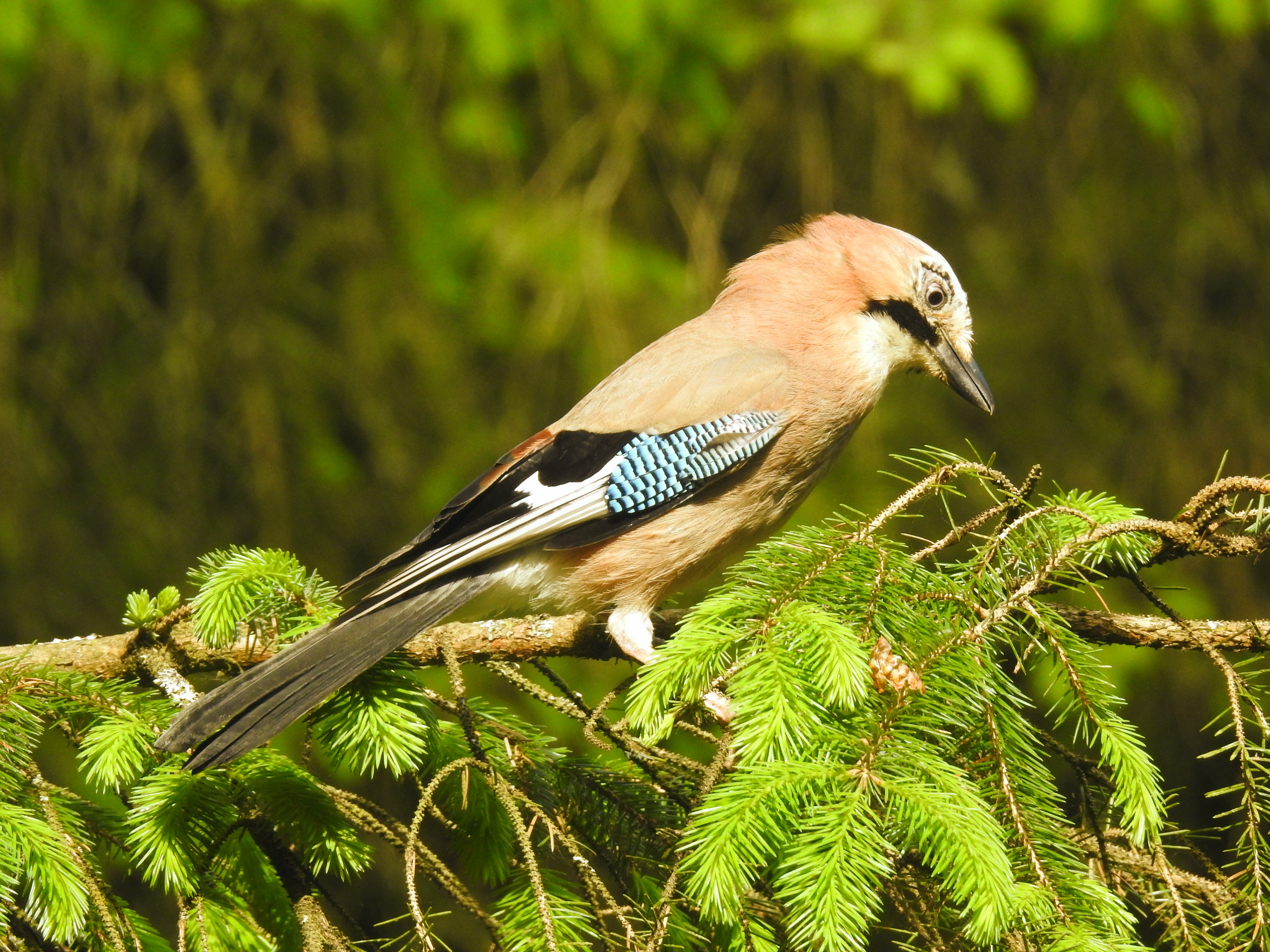
Plus a few more: from top to bottom, Robin, Song Thrush and this showy Jay.


American Golden Plover & another Holiday.

Tuesday 31st March 2026. The American Golden Plover at Bunny Meadows yesterday. Photo by Mark Francis. On my morning walk with the dogs aro...