Wednesday, March 9, 2022

Poorly again!

Wednesday 9th March 2022.


The Spotted Redshank within Sidlesham Channel last Saturday. It will not be long before it will be in Summer plumage.

On the back of a nasty toothache last week, both my wife and I have picked up some Flu bug and both of us are off work. I tested negative for the Coronavirus, thankfully, last night, but this morning, I felt I had been run over by a steamroller! The irritating cough does not help either and I think I am going to be running out of tissues very soon!  So, I have had a very lazy day, mostly sleeping, but now I am awake, I thought I would update the blog as it is now midweek.


An adult Med Gull within Pagham Harbour.

Though I was driving on Monday and a passenger yesterday, I did see a few birds that made my blog. The grassy area beside the DSTL building on Portsdown Hill, held at least a dozen Fieldfare that presumably had pit-stopped there, for they had gone later in the day. Anyway, nice to see these birds close up by the roadside as I was making my way along the top of the Hill. Yesterday, while my working colleague was driving along the M27 westbound, I spotted a pair of soaring Red Kites by the edge of the motorway and also a Common Buzzard perched on a small tree near the road. Early in the afternoon, as we drove past the QA Hospital and my work colleague, who was driving our vehicle, asked me what was flying in front of our vehicle. It was a superb male Sparrowhawk roughly doing the same speed limit we were traveling at until it banked off south and down the Hill. But what a view!


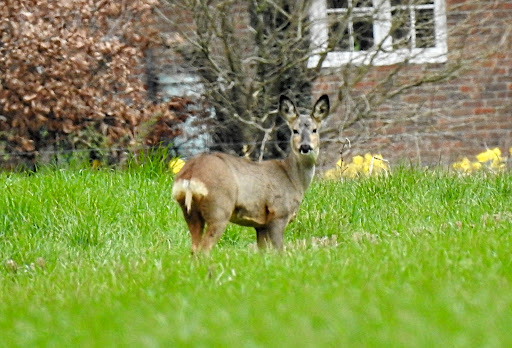
One of the buck Roe Deer's we saw in a field near the Church on Saturday.

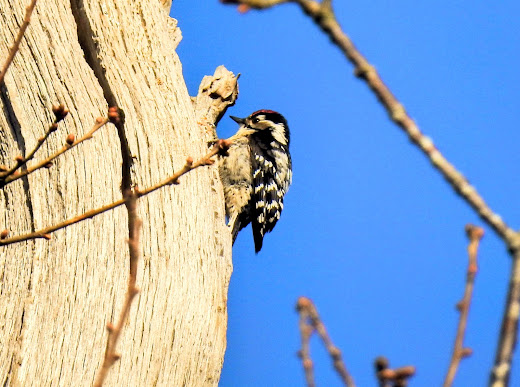
The Lesser Spotted Woodpeckers are still entertaining the birders at Acres Down, with sightings and superb photos shared on Whatsapp for all to enjoy. We are now into the second week of March and therefore, it was no surprise that a few migrants have arrived into the UK. Today, a male Wheatear was found at Durlston Head, Dorset and sightings of both Sand Martin and Little Ringed Plover were had in various areas of the UK. Late winter birds are still present in Hampshire, including the Great Grey Shrike at Backley Bottom in the New Forest. Offering only very limited views, it can be a struggle to locate this bird it seems. Not far from there, Blashford Lakes offered both Caspian and Ringed-billed Gull earlier this week and the Bittern is still present in front of the Ivy North Hide (if you can stay awake within the Hide!).  


Another photo of the Stock Dove we saw near the Church near Marsh Farm on Saturday.

Surprisingly, The Isle of Portland has been rather sparse for migrants with no Wheatear sightings reported yet, but they did have a very good sea-watch from the Bill this morning. 1385 Kittiwakes went through in just two hours along with 8 Manx Shearwater (I did not see any in 2021!), 9 Red-throated Divers, 1 Black-throated Diver and both Arctic and Great Skua. Nearby, Lodmoor RSPB Reserve held a Bonaparte’s Gull today.

Sunday, March 6, 2022

A trip into West Sussex.

Saturday 5th March 2022.


The Spotted Redshank by Sidlesham Ferry this morning.

It was back over to West Sussex this weekend as we picked up a trio of birds to add to our year list and it could easily have been at least four. My goal this morning was to hopefully see the Glossy Ibis around the Marsh Farm area of Sidlesham, but, yet again, they proved frustratingly elusive. At least it was a dry, but cold, day and thankfully, I was attired in warm clothing to keep that chilly wind out, plus a hot flask of coffee for refreshments.


Three-cornered Leek growing abundantly along Chalder Lane.


Daffodils lining Chalder Road.


Our first Lesser Celandine of the year were abundant too. 

Having picked Andy up a little later than usual as I popped in to see my father first thing this morning, we eventually made our way along the A27 westbound, through Chichester and then down to Chalder Lane within Sidlesham and parked up in the small car park at St Mary Our Lady Church. The roadside was adorned with flowering Daffodils, Primula’s, Three-cornered Leeks and Lesser Celandine as we made our way along the farmland roads, keeping a sharp eye-out within the fields for the Ibis.


This male Greenfinch was in full song along the road. 

One of a pair of Stock Doves seen near the Church.

Sadly, we never found the birds, but at least we saw at least 30+ Cattle Egrets in the distant fields and a nearby flooded field contained at least 60+ Wigeon, about a dozen Curlew and a few Little Egrets among them. I was surprised at how the roadside hedges were near deserted for birds, with no Yellowhammers or hardly any passerines present. Overhead, we had a sighting of a female Sparrowhawk soaring in the grey sky and at least two Common Buzzards were being chased off by Corvids. Though to be honest, apart from a pair of Roe Deer and several Pheasants, all was very quiet here. It seems the best way to see the Ibis here are when they are leaving or arriving at their roost site by the North Wall.


One of the flooded fields held a variety of birds including Wigeon, Gulls, Egrets and Curlew. 


One of two Roe Deer out in the fields.

Our next stop was to be Sidlesham Ferry Pool and so parking up in the small car park opposite the Park Centre, we made our way slowly to the Hide overlooking the Ferry Pool. Again, not a great deal of activity on our walk there, bar a few Goldfinches flying over and when we arrived at the Ferry Pool, the high water level on the pool held hardly any waders. There was a big flock of roosting Black-headed Gulls and among them we found at least two Mediterranean Gulls, both adults in full summer plumage which looked quite smart. Shoveler, Teal and Mallard were in small numbers on the water here, but little else of note. 


A lone adult Mediterranean Gull among the Black-headed Gulls on the Ferry Pool.  


The Spotted Redshank among the Teal near the Ferry Pool.

I did know that the regular Spotted Redshank was present on the stretch of water east of the Sluice and it did not take long to find the bird that was accompanying a Redshank. This was our first 'Spotshank' of the year and it performed for us really well, wading in the shallow water among a small flock of Teal dabbling on the water. We had a quick check out in the fields for any Grey Partridge, but not a sausage! The footpath adjacent to the Ferry Lagoon had been decimated by its owners, much to the disgust of the local birders here; all the shrub and bushes have all been cut down and for what purpose I might add? Just reckless management from the Landowners. Just a shame that the RSPB, who run Pagham Harbour now, could not put a stop to it.


This Great Northern Diver flew in and then promptly landed on the water distantly in front of us. 


Our next destination was to be Selsey Bill. It was around 11am when we arrived and rather than get out into the cold, we had a good viewing spot from the comfort of my car, overlooking a flat calm grey sea. Our first Gannet of the year duly arrived, a fine adult and although we were not packing a Scope, the bright white of the bird was clearly distinctive against the dark sky. A second bird was seen a little later. A Great Northern Diver flew in and looked to be coming towards the beach but it soon settled on the water and was seen several times subsequently bobbing on the water. Both Sandwich Tern and Mediterranean Gull flew past and at least three Red-breasted Mergansers flew distantly past during our time there. Though there was no sign of an early Wheatear or Sand Martin on or over the beach, there was a small flock of Turnstone on the beach until they flew off.


A few Turnstone were on the beach.


The Whimbrel on the salt marsh in Pagham Harbour.

Our last stop was Church Norton to check the harbour at high tide. Within a few minutes, the fresh marsh in front of us held our first Whimbrel of the year, the regular wintering bird that was roosting with a Curlew; our third and final ‘year-tick’ of the day. A few waders were resting near the concrete spit that included a few Grey Plover, Dunlin and Turnstone plus a few more adult Med Gulls glowing in the grey conditions. There were no raptors on Tern Island or the neighbouring islands and with the rising tide, we soon made our way back to the car and home.


The Curlew (left) with the Whimbrel on the salt marsh within the harbour.


Grey Plover, Dunlin and Turnstone were among the Gulls on the spit within the harbour. 

Earlier today, both mine and Andy’s moth box drew a complete blank when it came to the moths, but my fathers garden pond held a good display of Frog Spawn (see photo). Apparently, the Glossy Ibis were seen flying into their roost site later that afternoon along with a Short-eared Owl nearby and at Selsey Bill, there were at least 6 Great Northern Divers and a Slavonian Grebe earlier this morning. The ‘Lazee Birders’ were enjoying the Lesser Spotted Woodpeckers at Acre’s Down and even up to 5 Goshawks were seen as well. Blashford Lakes held both the Ring-billed Gull and 1st winter Caspian Gull and Andy J had a Ring-necked Parakeet flying over Sandy Point, Hayling Island today. 


Frog Spawn in my fathers pond this morning. 


Friday, March 4, 2022

Black-throated Diver no show!

Friday 4th March 2022.


Distant Red-breasted Mergansers in Cams Bay, including a few displaying drakes.

It was the last of my ‘days off’ for this fiscal year and as a pair of Black-throated Divers had been present in Portsmouth Harbour of late, I took the opportunity to see if I could add these lovely birds to my year list. Though it was overcast, it was fairly bright and dry though the temperature was well below 10 degrees. I had my ‘thick’ head on this morning as I went outdoors in my white trainers and having to walk across grass and mud to view Portsmouth Harbour from Portchester Castle, was not going to turn out well! 


Good numbers of Great Crested Grebes were present in both Cams Bay and Portsmouth Harbour.   


The Blackthorn Bushes are now in flower.

I had read that the birds could be seen from Portchester Castle and so I made my way to the small car park, paid the small fee for an hour and then walked to the shoreline looking south. The tide was high within the harbour but despite a lengthy search for the birds, all I could find were Mergansers, a few Great Crested Grebes and a single Cormorant for my efforts. I still have not had my Telescope back from Cley Spy yet, but they did say that it could be a couple of months before I hear any news, so therefore I had to rely on my trusty eyesight using my binoculars.


This Chiffchaff, most likely a wintering bird, was present within the bushes by the shoreline. 


Checking the ‘Lazee Birders’ Whatsapp site, some kind chap gave me the area from where he viewed the birds a few days ago and this was looking from Cams Bay from the Wicor Recreation Ground at the end of Cranleigh Road, where there were a lot of boat pontoons on the water. From there, the birds can hide from view should they be there but again, despite a long search for about 30 minutes, there was no sign of the birds at all. There were, again, plenty of Mergansers out on the water, though quite distant and a few Great Crested and Little Grebes dotted around by the pontoons, but not the star bird. A Chiffchaff was heard calling behind me and then it appeared within the small trees and showed very well, though not singing yet, plus a pair of Mediterranean Gulls that flew high overhead, calling loudly in doing so as I was crossing the football field on the way back to the car.


One of my work colleagues spotted and photographed this Angle Shades moth by our Copnor Branch yesterday and kindly sent it over to me.

Checking my Birdguides App, already, some Sand Martins have appeared in the UK, including 3 birds over Pennington village this morning. Here comes Spring! 


Thursday, March 3, 2022

John Langmaid RIP.

Thursday 3rd March 2022.


John Langmaid.

It was sad that we have lost not only a great moth expert, but a lovely friend. John Langmaid was indeed a very well respected moth expert who resided near where I live in Southsea. On a personal level, I would regularly be in awe at his expertise on micro moths and when I could not identify a catch within my moth box, I would go around Johns house where he would either take a bundle of tubes containing micro moths for him to identify or I would leave them on his doorstep and that day, he would send me an email with the identification of the moths.

John had reached the grand old age of 87 on his passing (would of been 88 in May) and despite getting a few short illnesses over the years, he was very sprightly for his age and his I believe his love for moths and wildlife (there were plenty of bird feeders in his garden) probably kept him going after he retired as a NHS Doctor many years before. John had built up a colossal collection of trays of moths of which he told me were going to the British Natural History Museum as requested in his Will. I, personally, was always fascinated by how quickly he could remember the name of the moth and always in Latin too as he had a loathing of the vernacular name for moths.

He would invite me upstairs to his study where he would put one of my moths, after being sedated, under the microscope and within seconds, he would have the ID or if not, would check with his own personal collection. There was no quibbling or guessing for he would ask me to leave the moth behind for a proper analysis. I was always excited to have a new moth for my life list, which, over the many years since ‘moth-ing’ , has grown steadily with John's expert knowledge.


This Passenger Moth, an extreme rarity in the UK, was found in John's moth trap on the 3rd August 2020.

I do not know much about John's personal life and so I shall not second guess; but the 'Moth-ing' world will now be a sadder place without him. Rest in Peace John and thank you. 


Wednesday, March 2, 2022

Midweek update.

Wednesday 2nd March 2022.


A wet dreary day did not put off the bird life here at The Oaks Crematorium. This is the woodland to the west of the Crem where a Firecrest showed well briefly. 

Though it has been relatively a cool week, it certainly has been damp with rain yesterday and today. Thankfully, there have been no storms down on the south coast and now that we are into March, it is evident to see that the blossom is now out on a lot of trees, hopefully bringing along some Spring-like weather to go with it. Already, a few migrants have made landfall in the UK as expected, with sightings of Osprey, Wheatear, Willow Warbler and Little Ringed Plover all seen in various parts of the UK. I have not heard a Chiffchaff singing as of yet, but I expect to hear one over the coming weeks. Some chap even claimed he heard a Cuckoo on the Isle of Wight today? 


This fungi was growing on one of the wooden tributes within the gardens of the Crem. 

Interestingly, a pair of Black-throated Divers have taken up residence in Portsmouth Harbour this week, notably seen off Portchester Castle and another off Sandy Point along with a Great Northern Diver and Slavonian Grebe. A Short-eared Owl was reported on Farlington Marshes today, despite the inclement weather. This week, I have been keeping an eye and ear out for the birds on my work travels and on Monday, I was at our Cosham Branch and at the back of the branch within Albert Road, my work colleague asked me ‘what on earth is that’? As he pointed out to the bird in question, it was a Red-legged Partridge of all things. It walked briefly by the road and then tried to fly over a wall, but failed. It then crossed the road and walked under my vehicle only to walk down the small road behind our branch and then out of view! This species is well known to turn up in the most unusual places. In fact, Andy Fisher had one in his garden once!


A Nuthatch that I saw within the woodland at Acre's Down last Saturday.  

Other birds seen on Monday included 3 Kestrels over Portsdown Hill and a single Common Buzzard. On Tuesday, the same stretch of road produced one Kestrel, a female Peregrine with prey in its talons and also a female Sparrowhawk! Just the one Skylark was seen as well over the adjacent ploughed field. Today, in wet conditions all day, Portsdown Hill produced one Kestrel, a single Skylark and at least 4 Red-legged Partridge, the latter seen while driving down B2177 in fields as I was heading towards Southwick Village. Over The Oaks Crematorium, there was a nice variety of birds present that included a Nuthatch flying over my head and into nearby woods. I took a walk down by the back field and a superb Red Kite lazily flapped low over the field and then headed off east over the woodland. Mistle Thrush, Blackbird and Song Thrush were all in song within the woodland and a Skylark was heard singing somewhere high above nearby.

Another photo of the 'drumming' Lesser Spotted Woodpecker within Acre's Down last Saturday.

I got a brief view of a Firecrest hovering beneath an Ivy Clump on the edge of the woodland, before disappearing back into the woodland, while up to 4 Great Tits and probably the same amount of Blue Tits were busy chasing one another. I did hear a Marsh Tit calling and probably saw the bird high up in some trees, but it was just a silhouette. Later in the day, a Long-tailed Tit was observed flying past me and my work colleagues near the main entrance. On the way back to our Fratton Branch, the big Crane by the M275 had finally been towed back to whence it came from near the bridge by Portsmouth Harbour after it slipped its moorings during Storm Eunice last week, causing the M275 northbound to be closed till midday!

I have had a few of these micro moths, Monopsis crocicapitella, within my kitchen area of late. 


Sunday, February 27, 2022

More New Forest gems.

Saturday 27th February 2022.

The male Lesser Spotted Woodpecker in the woodland at Acre's Down. 

It was a cracking day in the New Forest and it was as simple as that. We had a target list of birds we were hoping to see and not only did we see them and see them well, we even had a bonus bird too on our final trip within the Forest. The weather was most certainly on our side though it did get a little bit windy and cold as the day progressed. It was the regular reports from the ‘Lazee Birders’ that got my appetite whetted for taking a trip to Acre’s Down for the Lesser Spotted Woodpeckers and boy, did we get to see them.


Our first male Firecrest of the day at Acre's Downs showed well and was soon joined by a female.


Siskin's were abundant here at Acre's Down.

This enigmatic little gem can be a real nightmare to find, being so small and tending to be in the tops of tall trees, around this time they can be located by their distinctive ‘drumming’ and calls and with no leaves on the trees still, one does have a fighting chance of locating and viewing them. On arrival, we parked up within the car park and grabbed the last space and made our way south down the woodland path leading to ‘the bend’. Coming across a fellow birder photographing something within a Holly Tree, it turned out to be a gorgeous male Firecrest and minutes later, a female joined the bird and flew off into the nearby woodland.


This male Common Crossbill popped in by 'the bend' and showed well to us.

Almost immediately, I heard several Great Spotted Woodpeckers ‘drumming’ in various areas of the woodland and then I picked up the ‘drumming’ of a Lesser Spotted Woodpecker. A good start, although this one was distant. We decided to hang around ‘the bend’ area and waited, enjoying fresh coffee from my new flask and watching while good numbers of Siskin flying over and resting on the tops of trees. Common Crossbills also paid us a visit with at least 6 birds flying over and one superb male perching on top of a tree and showing superbly in the early morning sunshine. 


More photos of the delightful male Lesser Spotted Woodpecker. 


We waited patiently for around 15 minutes or so and then we heard a Lesser Spotted Woodpecker ‘drumming’ not too far away. A few minutes later, Andy spotted something interesting fly up into a nearby tree and we quickly got onto the bird and then realised we were watching our first Lesser Spotted Woodpecker of the day, a female too. My 150th species of bird in the UK for the year had been achieved and we were STILL in February! This was a difficult bird to photograph, but I was to have much better luck as the morning progressed. A male bird eventually was picked up ‘drumming’ on a tall dead tree and in the sunshine - what a view! I managed to grab some nice photos and even some film footage of this miniature Woodpecker, but increasingly rare bird.


Some film footage of the 'drumming' Lesser Spotted Woodpecker. 

This part of the Forest also produced some other goodies including a couple of female Bramblings feeding on the Forest leaf litter with a small group of Chaffinches. Both Nuthatches and Treecreepers were seen and at least 5 species of Titmice including a single Marsh Tit. I did see a Lesser Redpoll briefly, but it was too quick for me to grab a photo. Several Stock Doves flew over, but though this area is a real hot spot for Goshawks, none were seen. Another male Firecrest showed well for us while we were watching a male Lesser Spotted Woodpecker for 20 minutes or so by a huge fallen log and in amongst all this, Andy was doing his best Gollum impersonation from ‘Lord of the Rings’. Enjoy the film footage! 


A female Brambling in the woodland at Acre's Down.


This Nuthatch posed nicely in the woodland.

Our next stop was to be at Bolderwood for Hawfinch and even though it was only 11am, I was somewhat surprised at how many people were there in the car park. We got lucky and found a convenient parking place and Andy suggested we buy an ice cream from the Van present before heading off into the Holly clump where many previous sightings of Hawfinch were obtained. It did not take long for me to spot one sitting out on a branch, but it soon flew off and so after finishing our ice -creams, we made our way deeper into the small woodland. I heard a Firecrest again overhead and sure enough, another male bird was flitting about just above our heads.


Good numbers of Hawfinch were present around the Holly Trees at Bolderwood.


Walking out into the sodden clearing, we clocked a small flock of 6 birds flying through the trees, but there were more around. A few more birds flew out of the trees and headed off deeper into the woodland, their calls and with even some singing, it was a pleasure to be among the UK’s largest finches. A Raven passed overhead heading west and a few Coal Tits were heard calling close by. We walked further north through the very wet grassy area and then Andy spotted at least two birds high up in trees until they eventually flew off. Superb, two birds we were hoping to see today came to fruition and merrily hopped on board our year lists.


This Redwing within the Holly Bushes was 'sub-singing'.


Beefcake Fungus growing on a fallen Beech Tree at Acre's Down.

One of the ‘Lazee Birders’ took some lovely photos of a male Hen-Harrier over Blackgutter Bottom yesterday and though it was a bit blowy and cold now, so I decided that we needed to give the area a try. They also saw a Merlin and Dartford Warblers here at the same location, but to see the Harrier and Merlin was going to be a long shot. We parked up carefully by the roadside and made our way down the track and took refuge from the wind by the Gorse Bushes. Here we waited for around 30 minutes, enjoying views of at least 6 Common Buzzards and a male Kestrel, but no other signs of any other raptors. A distant herd of Fallow Deer were grazing distantly on the slopes, happy in attendance with nearby Ponies, but little else of note as the cold started to settle in. 


The 150th species us up for me with the Lesser Spotted Woodpecker sighting.


I got to the point where it was simply getting too cold and not a great deal else was happening and most of any raptor sightings (virtually all Common Buzzards) were distant, so we made our way back to the car. Nearing the road, I gave it one more sweep through my binoculars over the brow of the hill in the distance and low and behold, I gave the shout that I had a ‘ringtail’ Hen-Harrier flying low. Andy soon got onto the bird and amazingly, we had our third ‘year-tick’ of the day! The bird's white rump was seen a few times as she flew low over the heath and then twisted in mid-air and landed on the ground and out of view and that was the last we saw of it. Punching the air in delight, we went away from the New Forest with a big grin on our faces, reflecting on a superb day again. I put the Harrier sighting on the ‘Lazee Birders’ Whatsapp page and a little while later, someone said there were up to four birds there! Incredible. 


Fallow Deer grazing out on the heath west of Blackgutter Bottom.


SULPHUR PEARL moth added to my Moth Life List.

 Monday 3 rd August 2026. This SULPHUR PEARL   moth was a 'lifer' for me, which was found on the Church window of St. Margaret'...